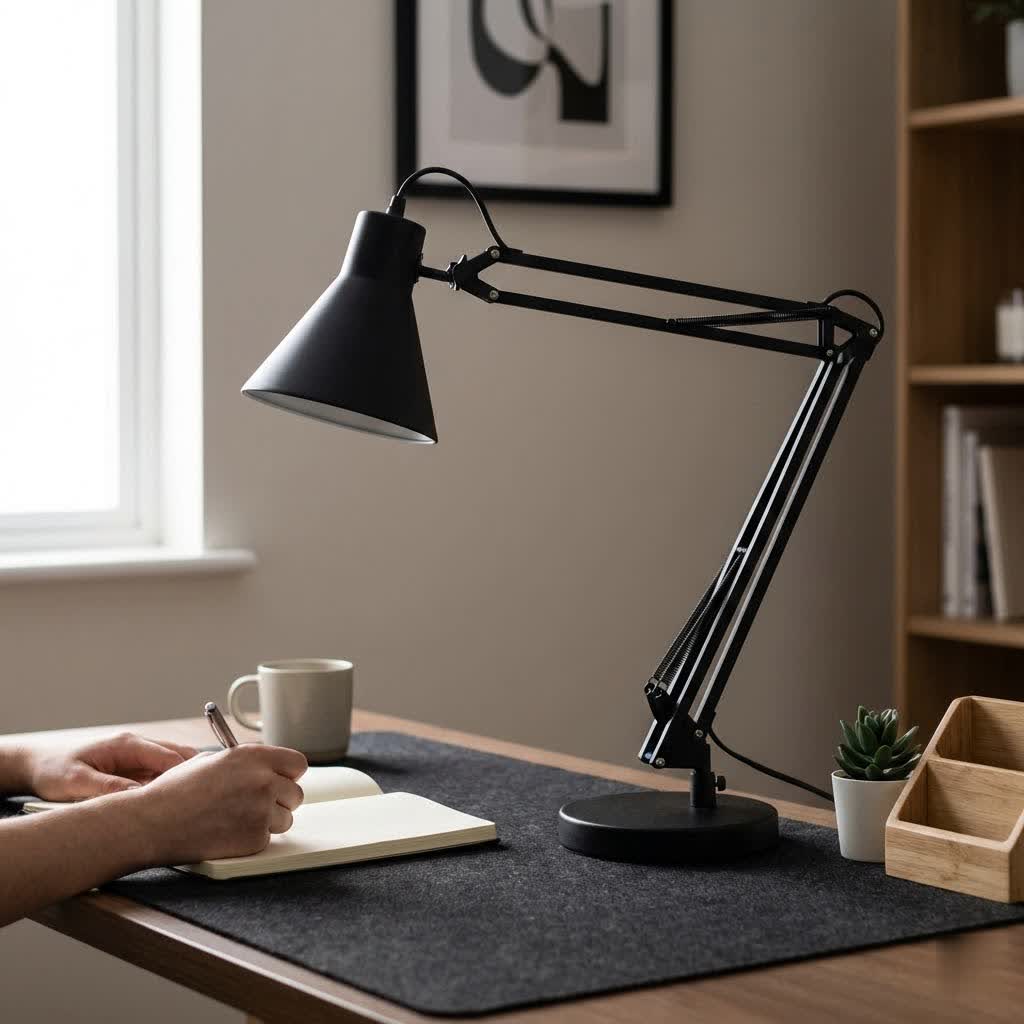
Have you ever found yourself squinting over intricate details, battling shadows, or experiencing eye strain after hours of focused work? For architects, artists, engineers, and hobbyists, lighting isn’t just a convenience; it’s a critical tool. Inadequate illumination can lead to costly errors, reduced productivity, and significant discomfort. This comprehensive guide will illuminate the world of drafting desk lamps, helping you understand their unique benefits and guiding you to choose the perfect light to enhance your precision work and protect your eyes.
Why a Dedicated Drafting Desk Lamp is Indispensable for Your Workspace
For anyone engaged in detailed tasks, whether sketching, drafting blueprints, or assembling intricate models, the quality of your lighting directly impacts your work and well-being. A standard desk lamp often falls short, providing uneven light, creating distracting shadows, or simply lacking the flexibility needed for precision. A specialized drafting desk lamp, however, is engineered to overcome these challenges. It provides clear, consistent illumination that reduces eye fatigue, enhances concentration, and allows for unparalleled accuracy in your craft. This dedicated lighting solution ensures that every line, every shade, and every detail is perfectly visible, allowing you to work longer and more effectively without strain. For explore our desk lamps reviews on this site.
Exploring the Spectrum: Types of Drafting Desk Lamps
The world of drafting lamps offers several designs, each with unique advantages for different workflows and workspace setups. Understanding these types is the first step toward finding your ideal companion.
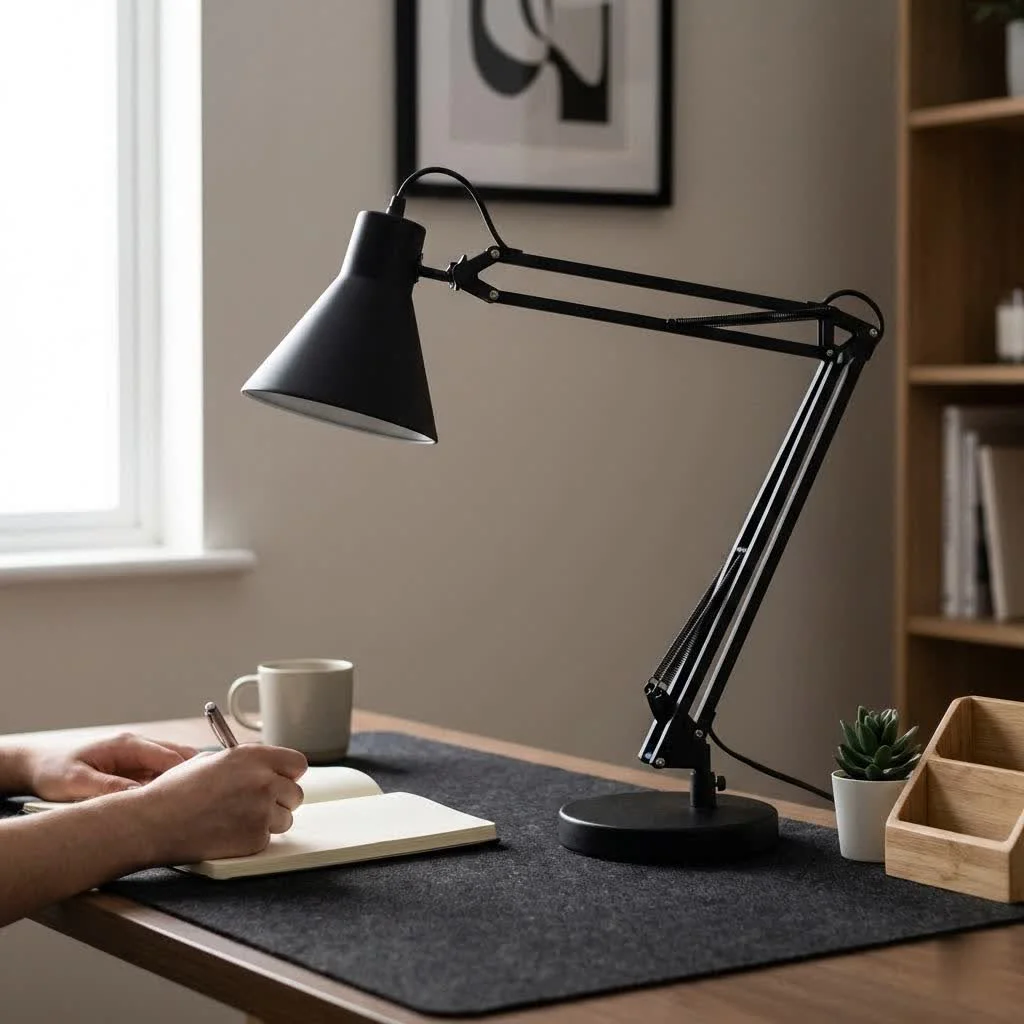
Architect/Swing Arm Lamps
These are perhaps the most iconic drafting lamps, characterized by their multi-jointed arms that allow for extensive horizontal and vertical reach.
- Description: Featuring spring-balanced or tension-controlled joints, these lamps can be precisely positioned over a large work area. They often mount securely with a clamp.
- Pros: Offer maximum adjustability and reach, keeping the light head parallel to your work surface. They are space-saving as they typically clamp onto the edge of a desk or drafting table.
- Cons: Can sometimes appear bulky due to their intricate arm mechanisms. High-quality models can be a significant investment.
Gooseneck Lamps
A simpler yet effective alternative, gooseneck lamps offer immediate, fluid adjustments.
- Description: Equipped with a flexible, bendable neck, these lamps allow for quick and easy adjustments to the light’s angle and direction.
- Pros: Incredibly simple to adjust with minimal effort. They are often more compact and can be a good choice for smaller workspaces where extreme reach isn’t a primary concern.
- Cons: Generally offer less stability and precise positioning compared to swing-arm models. Their reach is typically more limited.
Mounting Options: Clamp-On vs. Weighted Base
|
Our Picks for the Best Desk Lamp in 2026
As an Amazon Associate I earn from qualifying purchases.
|
||
| Num | Product | Action |
|---|---|---|
| 1 | Desktop Lamp 10X Magnification Magnifying Glass with Light and Stand with 360 Degree Adjustable Detachable Desktop Magnifier Suitable for Reading, Repairs, Crafts, and Close Work and More |

|
| 2 | LED Desk Lamp for Office Home, Eye-Caring Desk Light with Stepless Dimming Adjustable Flexible Gooseneck, 10W USB Adapter Desk Lamp with Clamp for Reading, Study, Workbench (Black) |
|
| 3 | LED Desk Lamp for Office Home, Eye-Caring Desk Light with Stepless Dimming Adjustable Flexible Gooseneck, 10W USB Adapter Desk Lamp with Clamp for Reading, Study, Workbench (Pink) |
|
| 4 | LED Desk Lamp with Clamp, Eye-Caring Clip on Lights for Home Office, 3 Modes 10 Brightness, Long Flexible Goose-Neck, Metal, Swing Arm Architect Task Table Lamps with USB Adapter, Black |
|
| 5 | Micomlan Led Desk Lamp with Clamp, Architect Desk Lamp for Home Office with Atmosphere Lighting, 24W Ultra Bright Auto Dimming Computer Light Stepless Dimming and Tempering LED Table Light |
|
| 6 | LED Desk Lamp with Clamp, Eye-Caring Clip on Lights for Home Office, 3 Modes 10 Brightness, Long Flexible Goose-Neck, Metal, Swing Arm Architect Task Table Lamps with USB Adapter, White |
|
| 7 | LED Desk Lamp for Office Home, Eye-Caring Desk Light with Stepless Dimming Adjustable Flexible Gooseneck, 10W USB Adapter Desk Lamp with Clamp for Reading, Study, Workbench (Grey) |
|
| 8 | LED Desk Lamp for Office Home, Power Strip with 3 Outlets 4 USB Charging Ports(2 USBC), 4 Modes 5 Level Brightness Desk Light, Small Desk Lamp for College Dorm Room Essentials |
|
| 9 | LED Desk Lamp for Office Home, Eye-Caring Desk Light with Stepless Dimming Adjustable Flexible Gooseneck, 10W USB Adapter Desk Lamp with Clamp for Reading, Study, Workbench (White) |
|
| 10 | LED Desk Lamp with Clamp, Architect Desk Lamp for Home Office with Remote, 24W Ultra-Bright Desk Light with Stepless Dimming and Stepless Color Temp, Memory Function for Study and Workbench |
|
The way your lamp attaches to your workspace is a crucial consideration for stability and desk real estate.
- Clamp-On: This is the most popular mounting method for drafting lamps. A robust clamp secures the lamp to the edge of a desk, drafting table, or even an easel. This frees up valuable surface area and provides a stable anchor, especially for lamps with long, articulated arms. Many clamps can accommodate surfaces up to 1.8 inches thick.
- Weighted Base: Some drafting lamps come with a heavy, stable base, similar to traditional desk lamps. While offering portability and ease of repositioning, they occupy a portion of your work surface. Some versatile models offer interchangeable clamp and base options.
Specialized Lamps
For niche needs, there are lamps that integrate additional functionalities. Magnifying lamps, for instance, combine illumination with magnification, making them invaluable for extremely fine detail work in crafts, electronics, or miniature painting.
Key Features to Consider When Choosing Your Drafting Desk Lamp
Selecting the perfect drafting lamp goes beyond aesthetics. It’s about optimizing your visual environment. Here’s what truly matters:
Light Source Technology: LED Reigns Supreme
Modern drafting lamps predominantly feature LED (Light Emitting Diode) technology, and for good reason.
- LED Advantages: LEDs are incredibly energy-efficient, boast a significantly longer lifespan than traditional bulbs, and produce very little heat, keeping your workspace comfortable. They offer instant-on illumination without flickering and can be engineered to deliver superior light quality.
- Legacy Options: While less common now, older lamps might use halogen or fluorescent bulbs. These typically offer less control over color temperature and brightness, and fluorescents can sometimes flicker, which is detrimental to eye health.
Brightness and Illumination Control
Your tasks will vary, and so should your light.
- Dimmability: Essential for adapting to different ambient light conditions or task requirements. Look for stepless dimming for precise control, or at least multiple brightness levels.
- Lumen Output: Ensure the lamp provides sufficient brightness (lumens) to adequately illuminate your entire work surface without creating harsh hotspots. A lamp designed for drafting will typically offer ample lumen output.
Color Temperature (CCT) and Color Rendering Index (CRI)
These two factors are paramount for visual accuracy, especially for artists and designers.
- Color Temperature (CCT): Measured in Kelvin (K), CCT describes the “warmth” or “coolness” of light. For drafting and art, a “daylight” color temperature (typically 4000K-6500K) is ideal. This neutral white light closely mimics natural daylight, ensuring colors appear true to life. Some advanced lamps offer adjustable CCT, allowing you to switch between warm and cool tones.
- Color Rendering Index (CRI): CRI measures how accurately a light source reveals the true colors of objects compared to natural daylight. A high CRI (80 or higher, with 90+ being excellent) is crucial for any detailed work involving color, such as painting, graphic design, or textile work. Without a high CRI, colors can appear dull or distorted.
Adjustability and Reach
The hallmark of a good drafting lamp is its ability to direct light precisely where it’s needed.
- Swing Arm vs. Gooseneck: As discussed, swing arms offer superior coverage and stability over large surfaces, while goosenecks provide quick, fluid adjustments for smaller areas. Consider the size of your drafting table and the span you need to cover.
- Arm Length and Joints: Look for an arm long enough to cover your entire workspace without needing to frequently reposition your work. Smooth, stable joints are critical for maintaining your desired position without slippage.
Mounting Options
Choosing the right mounting solution ensures stability and optimal use of your workspace.
- Secure Clamp: A heavy-duty clamp is paramount for drafting tables, providing a firm grip that won’t wobble or loosen during intense work sessions. Ensure the clamp can accommodate the thickness of your table.
- Versatility: Some lamps come with both a clamp and a weighted base, offering the flexibility to switch setups as your needs evolve.
Eye-Care Features
Prolonged detailed work demands features that protect your vision.
- Flicker-Free: High-quality LEDs should provide flicker-free illumination, which greatly reduces eye strain and headaches, especially during long periods of use.
- Blue Light Reduction: Some lamps are designed to minimize harmful blue light emissions, further safeguarding your eyes.
- Anti-Glare Diffusers: Diffusers soften the light, preventing harsh glare and hot spots that can strain your eyes and obscure details.
Build Quality and Durability
A drafting lamp is an investment in your productivity and health.
- Materials: Look for robust construction, often metal (aluminum or steel), which indicates durability and stability. High-quality plastics can also be used for certain components but metal frames generally offer superior longevity.
- Joint Mechanisms: The quality of the joints in a swing-arm lamp directly affects its lifespan and usability. They should feel solid, hold their position firmly, and operate smoothly.
Top Drafting Desk Lamps: A Comparative Overview
To give you an idea of what’s available, here’s a general comparison of common drafting lamp types based on their features:
| Model Feature | Adjustability | Light Quality (LED) | Mounting | Special Features |
|---|---|---|---|---|
| Premium Architect Lamp | Multi-joint swing arm, 36″+ reach | Dimmable (stepless), 5 CCT modes, CRI 95+ | Heavy-duty clamp/base | Touch controls, USB port, memory |
| Versatile Gooseneck Lamp | Flexible gooseneck, medium reach | Dimmable (3-5 levels), 3 CCT modes, CRI 85+ | Clamp-on | Compact design, easy repositioning |
| Budget-Friendly Task Lamp | Basic swing arm, moderate reach | Dimmable (fixed levels), daylight CCT, CRI 80 | Clamp-on | Simple operation, good entry-level |
| Magnifying Lamp | Flexible arm, close-up positioning | Dimmable, fixed CCT, high CRI | Clamp-on/Weighted base | Integrated magnifying lens, shadow-free |
Your Buying Journey: How to Select the Perfect Drafting Desk Lamp
Choosing the right drafting lamp requires a methodical approach. Consider these steps to make an informed decision:
-
Assess Your Workspace and Needs:
- Desk Size: Do you have a large drafting table or a compact desk? This will influence the necessary reach and preferred mounting style.
- Type of Work: Are you primarily drawing, painting, or working on detailed electronic components? Your tasks dictate the required precision, color accuracy, and brightness.
- Ambient Light: Does your workspace receive much natural light, or is it typically dim? This will impact the lamp’s needed brightness range.
-
Prioritize Key Features: Based on your assessment, rank the features that are most critical to you. Is maximum adjustability paramount? Or is a high CRI for color accuracy your top concern?
-
Read Reviews and Compare: While generic descriptions are helpful, real-world user reviews can offer insights into durability, ease of use, and actual light quality. Look for comments on flicker, stability of the arm, and the quality of the clamp.
-
Budget Considerations: Drafting lamps range widely in price. View your purchase as an investment in your productivity and eye health. While budget-friendly options exist, investing in a higher-quality lamp often pays off in longevity and superior performance.
-
Check Warranty and Support: A good warranty indicates the manufacturer’s confidence in their product. Knowing that support is available can be invaluable should any issues arise.
Maximizing Your Lamp’s Lifespan: Usage and Maintenance Tips
To ensure your drafting lamp serves you well for years to come, follow these simple usage and maintenance guidelines:
- Regular Cleaning: Dust and debris can accumulate on the lamp head and joints, potentially affecting light output and smooth movement. Gently wipe down the lamp with a soft, dry cloth regularly. For the light diffuser, use a slightly damp cloth if needed, ensuring it’s completely dry afterward.
- Proper Positioning: Always adjust the lamp arm by gripping the arm itself, not the lamp head or shade. This prevents unnecessary strain on the joints and wiring. Position the light to illuminate your work evenly, minimizing any shadows cast by your hand or tools.
- Bulb Replacement (if applicable): For lamps with replaceable bulbs (less common with integrated LEDs), always use the wattage and bulb type specified by the manufacturer. Using an incorrect bulb can damage the lamp or pose a fire hazard.
- Handle with Care: Avoid forcing the adjustable arms beyond their natural range of motion. While durable, constant rough handling can wear down the joints over time. When moving the lamp, secure the arm to prevent it from swinging freely.
“The right light isn’t just about seeing better; it’s about thinking clearer, creating with greater accuracy, and protecting the very vision that makes your craft possible.” – Admin, Reviewepedia, Senior Desk Lamp Technician
Conclusion: Illuminate Your Potential
A drafting desk lamp is far more than just a light source; it’s an essential tool that empowers precision, safeguards your eyes, and elevates your overall working experience. From the unparalleled flexibility of a swing-arm design to the critical importance of a high Color Rendering Index, every feature contributes to a workspace where clarity and comfort reign supreme. By understanding the different types, considering crucial features like adjustability and light quality, and following proper maintenance, you can select a lamp that perfectly aligns with your creative or professional demands.
Are you ready to transform your workspace and bring your designs to life with optimal clarity?
Frequently Asked Questions
What is the ideal brightness for a drafting lamp?
The ideal brightness often depends on your specific task and ambient light. However, many professionals prefer lamps that offer adjustable brightness (dimmable) to adapt to different conditions. Look for a lamp with sufficient lumen output that can illuminate your entire work area without creating glare or hot spots, allowing you to fine-tune it as needed.
What does CRI mean for artists?
CRI, or Color Rendering Index, measures how accurately a light source reveals the true colors of objects compared to natural daylight. For artists, designers, and anyone working with color, a high CRI (80 or higher, ideally 90+) is critical. It ensures that the colors you perceive under the lamp are faithful to their actual appearance, preventing errors and improving the quality of your work.
Can I use a regular desk lamp for drafting?
While you technically can use a regular desk lamp, it’s generally not recommended for detailed drafting or art. Regular desk lamps often lack the extensive adjustability (like swing arms), consistent illumination across a wide area, high CRI for color accuracy, and eye-care features found in specialized drafting lamps. This can lead to uneven lighting, distracting shadows, reduced precision, and increased eye strain.
How do I position my drafting lamp to avoid shadows?
To minimize shadows, position your drafting lamp so that the light source is above and slightly in front of your work, and from the opposite side of your dominant hand. For instance, if you’re right-handed, place the lamp on your left. A highly adjustable swing arm lamp is ideal for this, as it allows you to precisely direct the light to eliminate shadows cast by your hand or tools.
Are LED drafting lamps worth the investment?
Absolutely. LED drafting lamps offer significant advantages, including superior energy efficiency, a much longer lifespan, cooler operation, and the ability to produce high-quality, flicker-free light with excellent color rendering. While the initial cost might be slightly higher than older bulb types, the long-term savings on electricity and bulb replacements, coupled with the benefits of reduced eye strain and improved work quality, make them a worthwhile investment for any serious professional or hobbyist.
Get our weekly buyer guide
Practical specs, not advice. Unsubscribe anytime.
