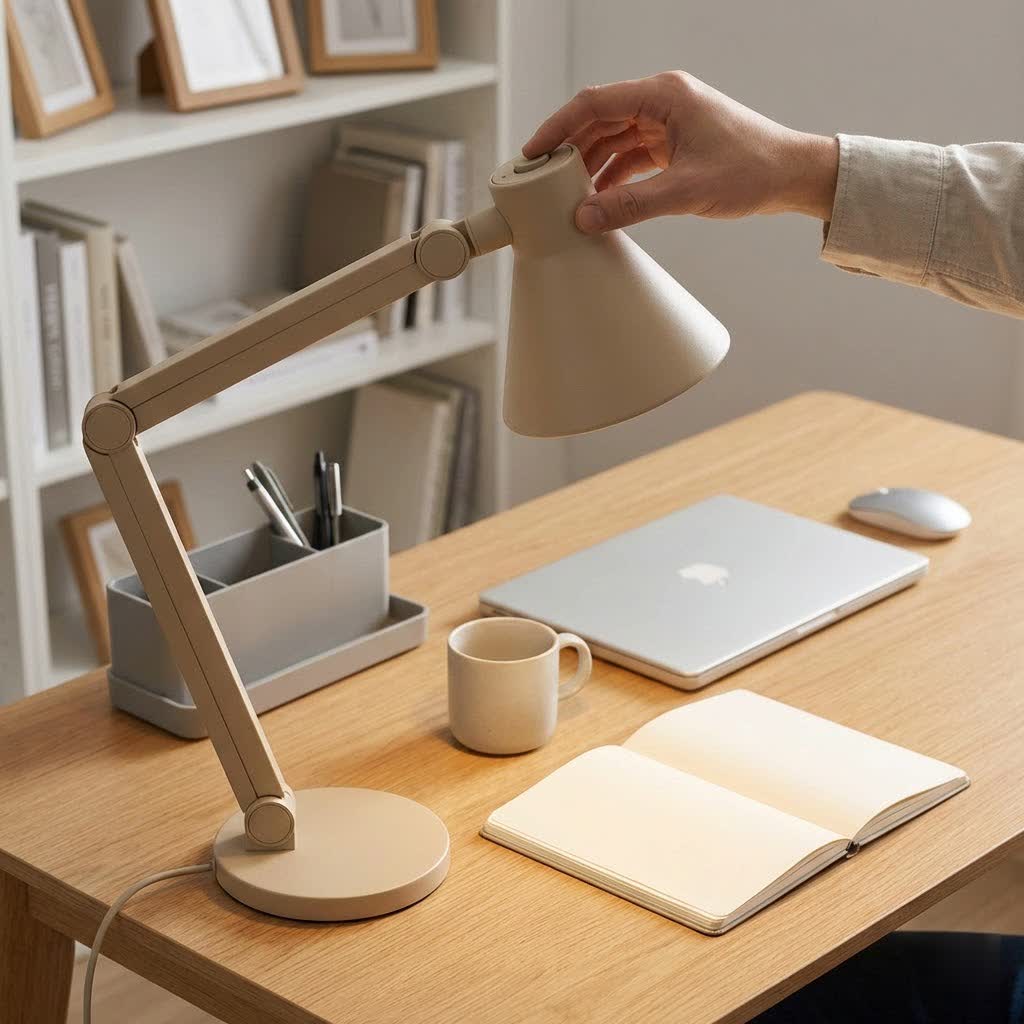
Are you tired of squinting at your screen or struggling to read under inadequate light? A bright desk lamp is more than just an accessory; it’s a vital tool for maintaining eye health, boosting productivity, and transforming your workspace into an efficient and comfortable environment. From students burning the midnight oil to professionals meticulously detailing projects, the right illumination can make all the difference. Let’s delve into the world of bright desk lamps and uncover how to select the perfect lighting solution tailored to your unique needs and style.
Why a Bright Desk Lamp is Essential
Imagine trying to focus on intricate tasks or delve into a complex book in a dimly lit room. The strain on your eyes would be immediate and detrimental. Proper lighting is not just about visibility; it’s about creating an optimal visual environment that supports your eyes, enhances concentration, and reduces fatigue. Without adequate light, you might experience headaches, blurred vision, and a significant drop in productivity. A well-chosen bright desk lamp combats these issues by providing targeted, high-quality illumination exactly where you need it, ensuring your workspace is always vibrant and conducive to success. For more desk lamps guides on this site.
Exploring Popular Desk Lamp Types
Desk lamps come in various forms, each offering distinct advantages based on their light source. Understanding these types is crucial for making an informed decision.
- LED Desk Lamps: Light Emitting Diodes (LEDs) are the frontrunners in modern lighting. They are highly energy-efficient, boast an exceptionally long lifespan, and deliver impressive brightness. LEDs also offer a wide spectrum of color temperatures and are often dimmable, providing unparalleled versatility. They are durable and emit minimal heat, making them a safe and cost-effective choice for any workspace.
- Halogen Desk Lamps: Halogen bulbs produce a very bright, focused light with a high color temperature, making them excellent for tasks requiring precise visibility. However, they tend to get quite hot and are less energy-efficient than LEDs.
- Fluorescent Desk Lamps: Fluorescent lamps are known for their energy efficiency and cool, often bluish-white light. They are often used to illuminate larger areas and can be a good option for general office lighting, though they may not offer the same adjustability as many LED models.
- Incandescent Desk Lamps: These traditional bulbs emit a warm, cozy light, often preferred for ambient or decorative lighting. While they offer a comforting glow, they are the least energy-efficient option and have a shorter lifespan, generating considerable heat.
- Full Spectrum Desk Lamps: Designed to mimic natural daylight, full spectrum lamps provide a balanced and vibrant illumination. They are ideal for tasks that demand accurate color perception and can help improve mood and energy levels, especially in environments with limited natural light.
Key Factors to Consider When Choosing a Bright Desk Lamp
Selecting the ideal bright desk lamp involves more than just picking the brightest option. Several factors contribute to the lamp’s effectiveness, comfort, and suitability for your workspace.
Bulb Type: The Heart of Your Lamp
|
Our Picks for the Best Desk Lamp in 2026
As an Amazon Associate I earn from qualifying purchases.
|
||
| Num | Product | Action |
|---|---|---|
| 1 | LED Desk Lamp for Office Home, Eye-Caring Desk Light with Stepless Dimming Adjustable Flexible Gooseneck, 10W USB Adapter Desk Lamp with Clamp for Reading, Study, Workbench (Black) |

|
| 2 | LED Desk Lamp for Office Home, Power Strip with 3 Outlets 4 USB Charging Ports(2 USBC), 4 Modes 5 Level Brightness Desk Light, Small Desk Lamp for College Dorm Room Essentials |
|
| 3 | LED Desk Lamp with Clamp, Eye-Caring Clip on Lights for Home Office, 3 Modes 10 Brightness, Long Flexible Goose-Neck, Metal, Swing Arm Architect Task Table Lamps with USB Adapter, White |
|
| 4 | LED Desk Lamp with Clamp, Eye-Caring Clip on Lights for Home Office, 3 Modes 10 Brightness, Long Flexible Goose-Neck, Metal, Swing Arm Architect Task Table Lamps with USB Adapter, Black |
|
| 5 | Desktop Lamp 10X Magnification Magnifying Glass with Light and Stand with 360 Degree Adjustable Detachable Desktop Magnifier Suitable for Reading, Repairs, Crafts, and Close Work and More |
|
| 6 | LED Desk Lamp for Office Home, Eye-Caring Desk Light with Stepless Dimming Adjustable Flexible Gooseneck, 10W USB Adapter Desk Lamp with Clamp for Reading, Study, Workbench (Pink) |
|
| 7 | Micomlan Led Desk Lamp with Clamp, Architect Desk Lamp for Home Office with Atmosphere Lighting, 24W Ultra Bright Auto Dimming Computer Light Stepless Dimming and Tempering LED Table Light |
|
| 8 | LED Desk Lamp for Office Home, Eye-Caring Desk Light with Stepless Dimming Adjustable Flexible Gooseneck, 10W USB Adapter Desk Lamp with Clamp for Reading, Study, Workbench (White) |
|
| 9 | LED Desk Lamp for Office Home, Eye-Caring Desk Light with Stepless Dimming Adjustable Flexible Gooseneck, 10W USB Adapter Desk Lamp with Clamp for Reading, Study, Workbench (Grey) |
|
| 10 | LED Desk Lamp with Clamp, Architect Desk Lamp for Home Office with Remote, 24W Ultra-Bright Desk Light with Stepless Dimming and Stepless Color Temp, Memory Function for Study and Workbench |
|
As discussed, LED bulbs are generally the most recommended for desk lamps due to their superior energy efficiency, longevity, and versatile brightness and color temperature options. When considering bulb type, always prioritize LED for its blend of performance and practicality.
Power and Brightness: Illuminating Your Task
Brightness is measured in lumens, which indicates the total light output, and lux, which measures the amount of light falling on a surface. For task lighting, lux is often a more relevant metric.
- For Reading: Aim for a lamp that emits between 500 and 1000 lumens to see text clearly without eye strain.
- For Intricate Tasks: Detailed drawings, crafts, or fine print may require a higher range of 800 to 1100 lumens.
- For General Office Work: A comfortable range is typically 500-700 lux.
- For Detailed Computer Work (Graphic Design, Programming): You might need 1000-1500 lux for optimal clarity and focus.
- For Residential Areas: 200-500 lux usually provides comfortable lighting.
- Generally, light levels below 50-100 lux are too dim and can cause discomfort and eye strain, while anything above 10,000 lux is excessive for most activities. Many LED lamps can achieve 300-500 lux with outputs of 600-1000 lumens.
Dimmable controls are a valuable feature, allowing you to adjust the brightness to suit different tasks and ambient light conditions, preventing your workspace from feeling like an interrogation room or being too dim.
Design and Style: Blending Form and Function
The aesthetics of your desk lamp should complement your workspace while providing optimal functionality.
- Style: From sleek, modern LED designs to classic banker’s lamps, industrial looks, or artistic sculptural pieces, there’s a style to match every decor.
- Materials and Durability: Look for quality materials that ensure the lamp’s longevity. Metal, high-grade plastics, and sturdy bases are indicators of good construction.
- Adjustability: A highly adjustable lamp is key to directing light precisely where needed. Look for features like:
- Adjustable Arm and Head: Allows you to position the light beam accurately.
- Swivel and Pivot Functions: Offers flexibility in light direction without moving the entire lamp.
- Telescoping Arms: Enables adjustment of both height and reach.
- Clamp-On Bases: Ideal for saving desk space.
Color Temperature: Setting the Mood and Focus
Color temperature, measured in Kelvin (K), influences the ambiance of your workspace and your productivity.
- Warm Light (2700K-3500K): Emits a soft, yellowish glow, similar to incandescent bulbs. This creates a cozy and relaxing atmosphere, suitable for lounge areas or unwinding.
- Cool Light (4000K-5500K): Produces a crisp, bluish-white light, akin to natural daylight. This vibrant, energetic light promotes focus and alertness, making it ideal for offices and workstations.
- Optimal for Computer Tasks: Research suggests that color temperatures close to natural daylight (4000K to 6500K) minimize eye strain and enhance visual acuity.
- 4000K-4500K: A neutral white, balancing warmth and coolness, perfect for extended computer use.
- 5000K: Resembles midday sunlight, excellent for reading and intricate tasks, boosting alertness.
- 6000K-6500K: Mimics early daylight, best for detail-oriented work, as it helps keep the mind alert by reducing melatonin production.
Additional Features for Enhanced Functionality
Modern desk lamps often come equipped with extra features that can significantly improve your lighting experience:
- Dimmable Brightness and Adjustable Color Temperature: Essential for customizing your lighting to specific tasks and times of day.
- USB Charging Ports and Wireless Chargers: Convenient for powering your devices without cluttering your desk with extra adapters.
- Timer Functions: Useful for conserving energy and managing work intervals.
- Touch Controls and Memory Settings: For easy, intuitive adjustments and recalling your preferred settings.
- Automatic Light-Sensing: Some advanced lamps can automatically adjust brightness based on ambient room light, maintaining optimal illumination.
Comparison of Common Desk Lamp Bulb Types
| Bulb Type | Advantages | Disadvantages |
|---|---|---|
| LED | Highly energy-efficient, long lifespan, versatile brightness/color, cool operation, durable | Higher initial cost, integrated bulbs can be hard to replace |
| Halogen | Very bright, focused light, high color rendering | Generates heat, less energy-efficient, shorter lifespan |
| Fluorescent | Energy-efficient, cool light for broad illumination | Can flicker, limited dimming options, contains mercury |
| Incandescent | Warm, cozy light, low initial cost | Very inefficient, short lifespan, generates significant heat |
| Full Spectrum | Mimics natural daylight, good for color perception | Can be more expensive, limited availability in some styles |
Your Comprehensive Guide to Buying a Bright Desk Lamp
Navigating the options for bright desk lamps can feel overwhelming, but a structured approach can simplify the process.
- Define Your Needs: What will you primarily use the lamp for? Reading, computer work, drafting, or general illumination? Your main tasks will dictate the required brightness and features.
- Prioritize Bulb Type: For efficiency, longevity, and versatility, LED is almost always the best choice.
- Determine Brightness and Color Temperature: Based on your tasks, identify the ideal lumen/lux range and color temperature (Kelvin) that promotes comfort and productivity.
- Evaluate Adjustability and Ergonomics: Ensure the lamp’s design allows you to position light precisely, reducing shadows and eye strain.
- Consider Additional Features: Decide if features like dimming, color temperature adjustment, charging ports, or smart controls are important for your workflow.
- Compare Quality and Value: Research reputable brands and read reviews to ensure durability and performance. While a higher price often indicates better quality, there are excellent options across various budgets.
- Check Warranty and Support: Understand the manufacturer’s warranty and customer service policies.
Practical Tips for Using and Maintaining Your Desk Lamp
To maximize the lifespan and effectiveness of your bright desk lamp, follow these simple tips:
- Optimal Placement: Position your lamp 15 to 36 inches away from your work area. If you’re right-handed, place the lamp on your left side (and vice versa for left-handers) to minimize shadows cast by your hand.
- Clean Regularly: Dust and grime can reduce light output. Gently wipe down the lamp shade and bulb (when cool) with a soft, damp cloth. Avoid harsh chemicals.
- Replace Bulbs as Needed: For lamps with replaceable bulbs, change them according to the manufacturer’s recommendations or when you notice a significant drop in brightness. LED bulbs have a very long lifespan, but eventually, they will dim.
- Protect from Damage: Avoid dropping the lamp or subjecting it to harsh impacts, especially models with flexible arms that can wear out over time.
- Adjust for Tasks: Get into the habit of adjusting your lamp’s brightness and color temperature to match the task at hand and the ambient light in the room. This not only saves energy but also optimizes your visual comfort.
Conclusion
Choosing the perfect bright desk lamp is an investment in your productivity, comfort, and eye health. By understanding the different types of bulbs, assessing appropriate brightness and color temperatures, and considering essential features and design, you can transform any workspace into a beacon of efficiency. Remember that the ideal lamp provides ample, glare-free light, precisely where you need it, adapting to your unique needs throughout the day. What aspects of your workspace do you think a new, brighter desk lamp could illuminate most effectively?
Get our weekly buyer guide
Practical specs, not advice. Unsubscribe anytime.
