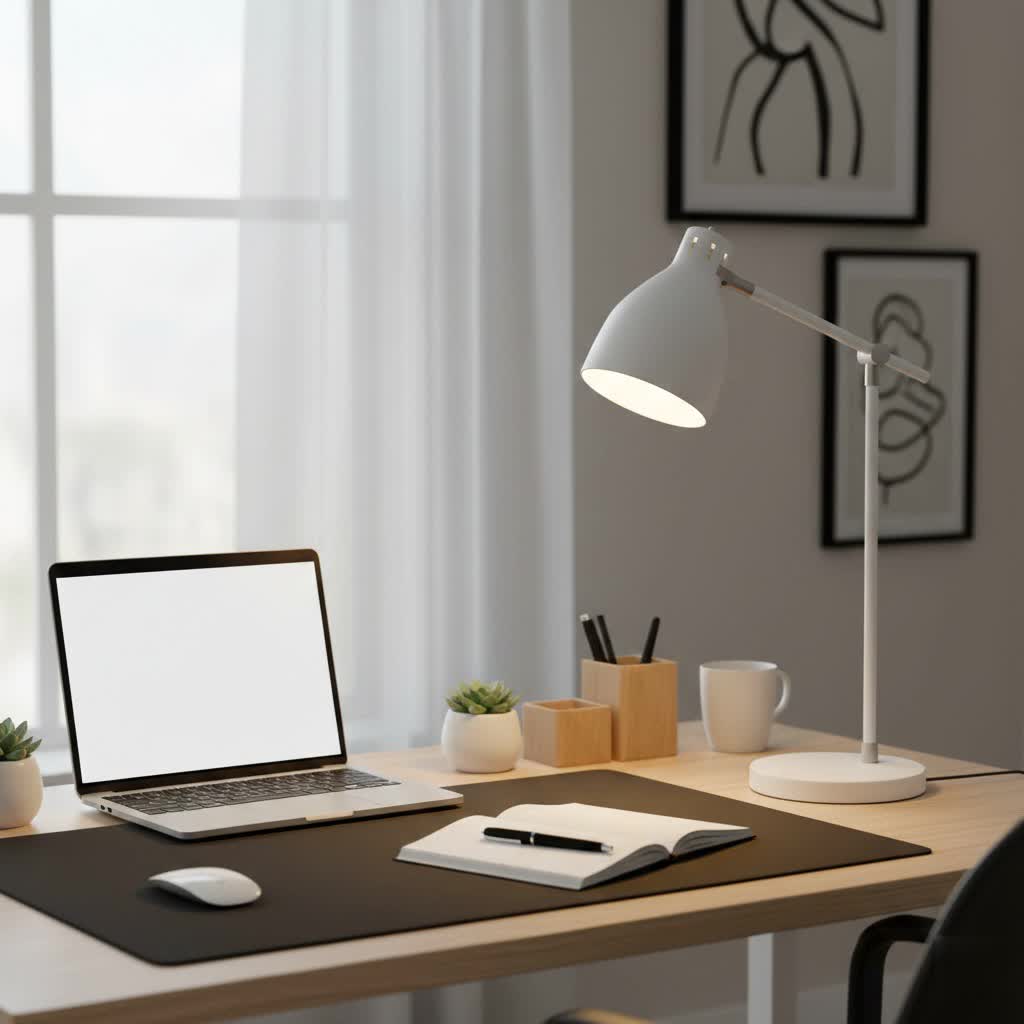
The best desk lamp for your needs depends on your specific activities, desk size, and aesthetic preferences. For general office work, a brightness of 450–500 lumens is often suitable, while detailed tasks may benefit from 800–1200 lumens. Key factors include bulb type (LEDs are energy-efficient), color temperature (warm for relaxation, cool for focus), and adjustability (gooseneck or swing arm). This guide explores various types, essential features, and top recommendations to help you find the perfect lighting solution.
Why You Need a Desk Lamp
Many individuals spend countless hours working, studying, or engaging in hobbies at a desk, making proper lighting crucial. Subpar illumination can lead to persistent eye strain, headaches, and general fatigue, which diminish focus and productivity. Squinting at documents or a computer screen in dim light adds unnecessary stress on your eyes.
A quality desk lamp is specifically designed to combat these issues. It provides focused, customizable light exactly where you need it, reducing harsh shadows and glare. This targeted illumination ensures optimal visibility for various tasks, from intricate drawing to intensive reading, thereby improving concentration and overall comfort. Investing in a good desk lamp safeguards your eyes while enhancing your ability to perform at your best.
Popular Types of Desk Lamps
The market offers a diverse range of desk lamps, each with unique features designed to cater to different needs and aesthetic preferences. Understanding these varieties is the first step in finding your ideal lighting companion.
- Adjustable Arm Lamps / Swing Arm Lamps: These lamps feature multiple pivot points and a long, movable arm, allowing for precise positioning and directional lighting. They are highly favored by architects, artists, and anyone engaged in detailed, task-oriented work where light placement is critical.
- Gooseneck Lamps: Characterized by a highly flexible, bendable neck, gooseneck lamps offer exceptional versatility in directing light. They are often lightweight, budget-friendly, and popular for reading, student use, or basic tasks requiring quick light adjustments.
- Clip-On Lamps: Ideal for maximizing desk space, clip-on lamps attach securely to the edge of a desk, shelf, or monitor. They are perfect for small or minimalist workstations and offer portability, making them suitable for travel or temporary setups.
- LED Desk Lamps: Dominating the modern market, LED desk lamps are celebrated for their energy efficiency, long lifespan, and cool operation. Many models offer adjustable color temperature and brightness settings, making them versatile for all-purpose use, from focused work to ambient lighting.
- Banker’s Lamps: With their distinctive traditional design, often featuring a green glass shade and a brass base, banker’s lamps provide a soft, focused downward glow. They are an excellent choice for traditional or vintage-themed decor and commonly found in libraries or classic home offices.
- Magnifying Desk Lamps: These specialized lamps integrate a magnifying lens, making them invaluable for tasks that demand close-up inspection or intricate detail work. They are a favorite among hobbyists, jewelers, and anyone who frequently works with small components or fine print.
- Modern/Touch-Control Lamps: Characterized by sleek lines and minimalist aesthetics, these lamps often incorporate touch controls for brightness and color temperature adjustments, along with other smart features. They blend seamlessly into contemporary and tech-inspired workspaces.
Key Factors When Choosing a Desk Lamp
Selecting the best desk lamp requires considering several crucial factors to ensure it meets your specific needs for lighting quality, functionality, and aesthetic appeal.
Bulb Type and Energy Efficiency
|
Our Picks for the Best Desk Lamp in 2026
As an Amazon Associate I earn from qualifying purchases.
|
||
| Num | Product | Action |
|---|---|---|
| 1 | LED Desk Lamp for Office Home, Eye-Caring Desk Light with Stepless Dimming Adjustable Flexible Gooseneck, 10W USB Adapter Desk Lamp with Clamp for Reading, Study, Workbench (Black) |

|
| 2 | LED Desk Lamp for Office Home, Eye-Caring Desk Light with Stepless Dimming Adjustable Flexible Gooseneck, 10W USB Adapter Desk Lamp with Clamp for Reading, Study, Workbench (Grey) |
|
| 3 | Desktop Lamp 10X Magnification Magnifying Glass with Light and Stand with 360 Degree Adjustable Detachable Desktop Magnifier Suitable for Reading, Repairs, Crafts, and Close Work and More |
|
| 4 | LED Desk Lamp for Office Home, Eye-Caring Desk Light with Stepless Dimming Adjustable Flexible Gooseneck, 10W USB Adapter Desk Lamp with Clamp for Reading, Study, Workbench (Pink) |
|
| 5 | LED Desk Lamp with Clamp, Eye-Caring Clip on Lights for Home Office, 3 Modes 10 Brightness, Long Flexible Goose-Neck, Metal, Swing Arm Architect Task Table Lamps with USB Adapter, Black |
|
| 6 | LED Desk Lamp with Clamp, Eye-Caring Clip on Lights for Home Office, 3 Modes 10 Brightness, Long Flexible Goose-Neck, Metal, Swing Arm Architect Task Table Lamps with USB Adapter, White |
|
| 7 | Micomlan Led Desk Lamp with Clamp, Architect Desk Lamp for Home Office with Atmosphere Lighting, 24W Ultra Bright Auto Dimming Computer Light Stepless Dimming and Tempering LED Table Light |
|
| 8 | LED Desk Lamp for Office Home, Power Strip with 3 Outlets 4 USB Charging Ports(2 USBC), 4 Modes 5 Level Brightness Desk Light, Small Desk Lamp for College Dorm Room Essentials |
|
| 9 | LED Desk Lamp for Office Home, Eye-Caring Desk Light with Stepless Dimming Adjustable Flexible Gooseneck, 10W USB Adapter Desk Lamp with Clamp for Reading, Study, Workbench (White) |
|
| 10 | LED Desk Lamp with Clamp, Architect Desk Lamp for Home Office with Remote, 24W Ultra-Bright Desk Light with Stepless Dimming and Stepless Color Temp, Memory Function for Study and Workbench |
|
The type of bulb significantly impacts light quality, energy consumption, and heat output.
- LED (Light Emitting Diode): Highly recommended for their exceptional energy efficiency, long lifespan, and minimal heat emission. LEDs are available in a wide range of color temperatures and often feature dimmable functions, offering great flexibility.
- Halogen: These bulbs provide a bright, crisp light that closely mimics natural daylight. However, they are less energy-efficient than LEDs and produce more heat.
- Fluorescent / CFL (Compact Fluorescent Lamp): Energy-efficient and typically cooler than incandescent or halogen, but some users may find older CFLs prone to flickering or emitting a cooler, sometimes bluish light.
- Incandescent: While offering a warm, inviting glow, incandescent bulbs are the least energy-efficient and generate considerable heat, making them less ideal for extended use.
Brightness and Light Quality
Optimal brightness is essential for comfort and performance. Aim for a lamp that provides adequate illuminance without being overpowering.
- For general office work, a brightness of 450–500 lumens is often suitable.
- For detailed tasks or intensive studying, 800-1200 lumens can be more beneficial.
- Look for lamps with dimmable features to adjust light intensity based on time of day, ambient light, or specific tasks.
- Flicker-free illumination is crucial to prevent eye strain and fatigue, especially during prolonged use.
Color Temperature (Kelvin)
The color temperature of a lamp, measured in Kelvin (K), influences mood and concentration.
- Warm Light (2700K – 3000K): Emits a soft, yellowish glow, ideal for creating a relaxing and cozy ambiance, often preferred for reading or winding down.
- Cool White Light (4000K – 5000K): Provides a crisper, more bluish-white light that promotes alertness and concentration, making it excellent for focused work, studying, or intricate tasks. Many modern LED lamps offer adjustable color temperature to suit different activities throughout the day.
Design and Style
Beyond functionality, a desk lamp should complement your workspace aesthetics.
- Style: Consider the overall theme of your room—modern, traditional, industrial, minimalist, etc.—and choose a lamp that integrates seamlessly.
- Material and Finish: Lamps come in various materials like metal, wood, plastic, or even marble, with finishes such as brushed nickel, brass, matte black, or glossy white.
- Proportion and Size: Ensure the lamp’s size is appropriate for your desk; a large lamp can overwhelm a small surface, while a tiny lamp might not provide sufficient coverage for a sprawling desk.
Adjustability and Flexibility
The ability to direct light precisely is a significant advantage.
- Flexible Neck (Gooseneck): Allows for effortless bending and twisting to aim light in any direction.
- Swing Arm / Articulating Arm: Provides a wider range of motion, extending and retracting to cover larger areas or specific points.
- Rotating Head / Pivot Joints: Enables fine-tuning of the light angle to reduce glare on screens and illuminate work surfaces effectively.
Additional Features
Many modern desk lamps offer extra functionalities that enhance user experience.
- USB Charging Ports: Convenient for charging smartphones, tablets, or other USB-powered devices directly from your lamp.
- Wireless Charging: Integrated charging pads on the lamp base allow for effortless charging of Qi-enabled devices.
- Auto-Off Timers: Useful for energy saving, automatically turning off the lamp after a set period.
- Automatic Light Sensors: Adjust the lamp’s brightness based on the ambient light in the room, optimizing illumination throughout the day.
- Phone Stands and Pen Holders: Integrated organizational features that help keep your workspace tidy and functional.
Comparison Table: Top Desk Lamp Models
Choosing from the many options can be daunting. Here’s a quick comparison of some highly-rated desk lamps, highlighting their strengths and weaknesses:
| Model | Pros | Cons |
|---|---|---|
| EppieBasic LED Desk Lamp | Wide light coverage, auto light sensor, adjustable color/brightness, sleek design, clamp-on saves desk space | Primarily clamp-on (needs specific desk thickness), flexible neck may wear over time, no USB/wireless charging |
| Lampat LED | Excellent value, integrated USB charging, multiple brightness/color modes, auto-off timer, light-up buttons | Lamp head does not swivel (only arm), some recoil when adjusting |
| LEPower Metal Desk Lamp | Simple, very budget-friendly, adjustable pipe neck, uses standard household bulbs, heat dissipation holes | Casts harsher shadows, shorter reach, no variable light settings, basic functionality |
| Mchatte LED | Affordable, integrated wireless phone charging, USB-A port, 5 color & 10 brightness levels, timer | Lamp head does not tilt side-to-side, wireless charging LED indicator is always on |
| Globe Electric 56963 | Clamp-on design (saves space), high adjustability in height, large clamp opening, extra-long cord | No adjustable light settings (brightness/color dependent on bulb), bulky appearance |
How to Buy the Perfect Desk Lamp
Navigating the choices for a new desk lamp can be simplified by following a structured approach that prioritizes your individual requirements.
- Assess Your Needs: Begin by considering your primary activities at the desk. Are you a student requiring intense light for studying? An artist needing precise, glare-free illumination? Or a remote worker looking for comfortable, adjustable lighting for long computer sessions? Also, evaluate your desk size and the existing ambient light in your room.
- Choose the Right Lamp Type & Features: Based on your needs, select a lamp type that offers the most relevant functionalities. If space is limited, a clip-on or clamp-on design might be ideal. For maximum flexibility, an adjustable arm or gooseneck lamp would be suitable. Consider additional features like USB ports, wireless charging, or timers if they align with your workflow.
- Prioritize Brightness & Color Temperature: Look for lumens and Kelvin ratings that match your tasks. Dimmable options and adjustable color temperature provide the most versatility, allowing you to switch between stimulating cool light for focus and relaxing warm light for casual reading.
- Evaluate Design & Build Quality: Ensure the lamp’s aesthetic complements your workspace and its construction feels sturdy and durable. Materials like metal generally offer better longevity than cheaper plastics.
- Read Reviews & Compare: Before making a final decision, consult expert reviews and user feedback. Pay attention to comments regarding durability, ease of use, and actual performance in various scenarios. Compare different models within your budget to find the best balance of features and value.
Top 5 Recommended Desk Lamps
Based on comprehensive testing and user feedback, here are five highly recommended desk lamps, each excelling in different aspects to cater to diverse needs:
- EppieBasic LED Desk Lamp: This Editors’ Choice winner is perfect for serious workstations requiring extensive light coverage. Its 31.5-inch wide LED bar illuminates an entire desk, while its 45-degree angled LEDs prevent screen glare. Features like touch controls for brightness and color temperature, plus an automatic light-sensing mode, make it a smart and effective choice for enhancing productivity.
- Lampat LED: Earning a “Best Buy Award,” the Lampat LED offers exceptional value. It boasts five brightness levels and four lighting modes (reading, studying, relaxing, sleeping), along with a convenient 1-hour auto-off timer and a 5V/1A USB charging port. It’s a versatile and budget-friendly option for various daily tasks.
- LEPower Metal Desk Lamp: For those seeking simplicity and affordability, the LEPower Metal Desk Lamp is a solid pick. This basic, traditional lamp features an adjustable pipe neck and uses standard household bulbs. While lacking advanced features, its straightforward functionality and compact design make it a reliable light source for everyday needs.
- Globe Electric 56963: If you prefer a clamp-on style for maximum desk space, this “Top Pick Award” recipient is hard to beat. It extends to a maximum height of 32 inches, ideal for large projects, and its spring-assisted articulating elbows allow for easy one-hand adjustment. The large clamp opening fits most desktops, offering great flexibility.
- Mchatte LED: This desk lamp stands out for its integrated wireless phone charging pad and additional USB-A port, making it perfect for tech-savvy users. It also offers five different color settings and ten levels of brightness, along with a timer function, all at an affordable price point.
“The right lighting can transform a workspace, reducing fatigue and boosting creativity. It’s not just about illumination; it’s about creating an environment where you can thrive.”
Tips for Using and Maintaining Your Desk Lamp
To ensure your desk lamp provides optimal performance and lasts for years, proper usage and maintenance are key.
- Optimal Placement: Position your desk lamp on the side opposite your dominant hand to minimize shadows while writing or working. Angle the light to avoid direct glare on your computer screen, often best achieved by placing it slightly to the side or behind your monitor. The lamp shade should generally be at least 15 inches above your desk surface.
- Regular Cleaning: Dust can accumulate on the lamp and bulb, reducing light output. Gently wipe down the lamp’s surface and bulb (when cool) with a soft, dry cloth regularly. For stubborn grime, a slightly damp cloth can be used on the exterior, avoiding electrical components.
- Bulb Management: If your lamp uses replaceable bulbs, ensure you use the correct wattage and bulb type specified by the manufacturer. LEDs generally last for tens of thousands of hours, but if you notice flickering or dimming from other bulb types, it might be time for a replacement.
- Adjust for Tasks: Take advantage of your lamp’s adjustability. Change the brightness and color temperature to suit your current task – brighter, cooler light for concentration, and warmer, softer light for relaxation or reading.
- Energy Saving Habits: Utilize features like auto-off timers or simply switch off your lamp when leaving your desk, even for short periods. This conserves energy and extends the life of your bulb.
Conclusion
Choosing the best desk lamp is a personalized journey that significantly impacts your daily comfort and efficiency. By understanding the diverse types available, from the versatile gooseneck to the smart LED, and carefully considering crucial factors like brightness, color temperature, and adjustability, you can find a lamp that perfectly aligns with your needs. Investing in a high-quality desk lamp is more than just buying a light source; it’s an investment in your eye health, productivity, and the overall ambiance of your workspace. Take the time to explore your options and select a lamp that will illuminate your tasks and enhance your environment for years to come.
What unique feature do you find most indispensable in your ideal desk lamp?
Frequently Asked Questions
Frequently Asked Questions
What is the ideal brightness for a desk lamp?
For general office work, a desk lamp with 450u2013500 lumens is usually sufficient. However, for more intensive tasks like studying or intricate detailed work, a brightness level between 800 and 1200 lumens is often recommended to ensure adequate illumination and reduce eye strain.
Which bulb type is best for eye health in a desk lamp?
LED bulbs are generally considered the best for eye health due to their ability to offer flicker-free illumination and often come with adjustable color temperature settings. This allows you to switch between warm light (for comfort) and cool light (for concentration), adapting to different tasks and reducing eye fatigue.
Can a desk lamp effectively help reduce eye strain?
Absolutely. A well-chosen desk lamp can significantly help reduce eye strain by providing targeted, adequate, and customizable lighting that minimizes glare and harsh shadows on your work surface or screen. Adjustable brightness and color temperature further allow you to create optimal lighting conditions for your eyes.
What is the difference between warm and cool light temperatures?
Warm light (around 2700K-3000K) has a yellowish, softer tone, similar to traditional incandescent bulbs, which promotes relaxation and comfort. Cool light (around 4000K-5000K) emits a crisper, more bluish-white light, akin to daylight, which is ideal for boosting alertness, concentration, and productivity during work or study.
Where is the optimal placement for a desk lamp?
To minimize shadows and glare, place your desk lamp on the side opposite your dominant hand. For instance, if you're right-handed, position the lamp on your left. Angle the light to shine directly on your work area without reflecting off your computer screen or causing discomfort to your eyes.
How to Buy the Perfect Desk Lamp
Follow these steps to choose a desk lamp that perfectly suits your needs and enhances your workspace.
Consider your primary activities at the desk, such as studying, intricate work, or long computer sessions. Evaluate your desk size and the existing ambient light in your room to determine specific lighting requirements.
Select a lamp type that offers relevant functionalities based on your needs. For limited space, a clip-on or clamp-on design is ideal. For maximum flexibility, an adjustable arm or gooseneck lamp is suitable. Consider additional features like USB ports, wireless charging, or timers if they align with your workflow.
Look for lumens and Kelvin ratings that match your tasks. Dimmable options and adjustable color temperature provide versatility, allowing you to switch between stimulating cool light for focus and relaxing warm light for casual reading.
Ensure the lamp's aesthetic complements your workspace and its construction feels sturdy and durable. Materials like metal generally offer better longevity than cheaper plastics, contributing to the lamp's overall lifespan.
Before making a final decision, consult expert reviews and user feedback. Pay attention to comments regarding durability, ease of use, and actual performance in various scenarios. Compare different models within your budget to find the best balance of features and value.
Get our weekly buyer guide
Practical specs, not advice. Unsubscribe anytime.

I finally upgraded my old lamp after reading about the importance of lumens for eye health. This guide really helped me understand the difference. I went with one of the LED recommendations for general office work, and the 500 lumens is perfect. My eyes feel so much better at the end of the day, and I’m not squinting anymore. Highly recommend paying attention to those brightness levels!
I got a swing arm lamp based on the adjustability feature mentioned, and while it’s great for positioning, the color temperature is a bit too cool for my taste. I was hoping for something a little warmer for my evening reading. It’s good for focus during the day, but I wish I’d paid more attention to that detail. Still a decent lamp, just not quite what I expected.
I was experiencing constant headaches from poor lighting at my desk. After reading about how crucial proper illumination is, I invested in one of the recommended lamps with a good color temperature for focus. The difference is night and day! No more eye strain or fatigue. It’s amazing how much a good desk lamp can impact your overall well-being and focus.
This post was super helpful in narrowing down my choices. I needed a lamp for detailed tasks like drawing, and the suggestion of 800-1200 lumens was spot on. I ended up with a gooseneck style, which gives me the flexibility I need. It’s made a huge difference in my ability to see fine lines without straining. My productivity has definitely gone up.