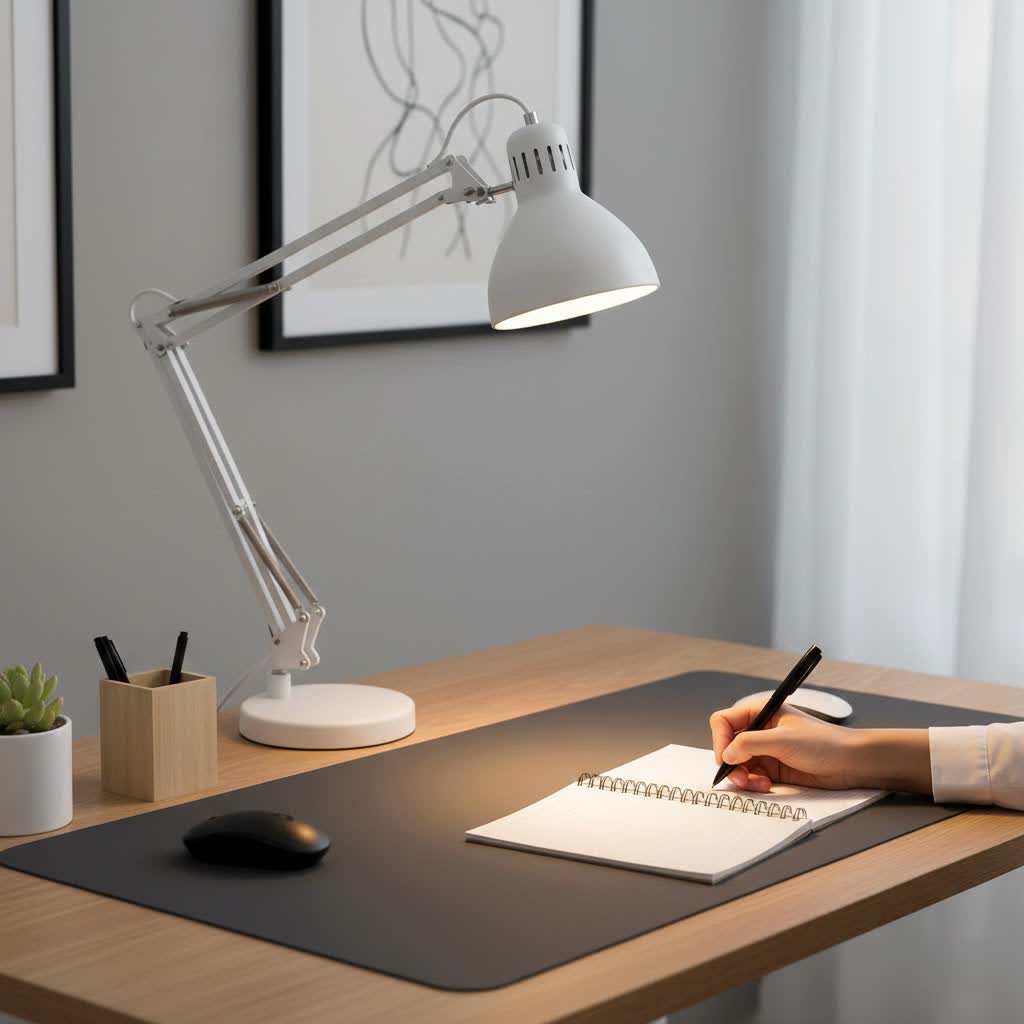
In our increasingly digital world, where screens dominate and work often extends beyond daylight hours, the importance of proper lighting cannot be overstated. A well-chosen desk lamp is not merely a source of light; it’s a crucial tool for enhancing productivity, protecting your vision, and transforming your workspace into an efficient and comfortable haven. Have you ever found yourself squinting at documents or straining your eyes after hours at your desk? This article will guide you through everything you need to know about selecting the perfect desk lamp to meet your specific needs and elevate your work or study environment.
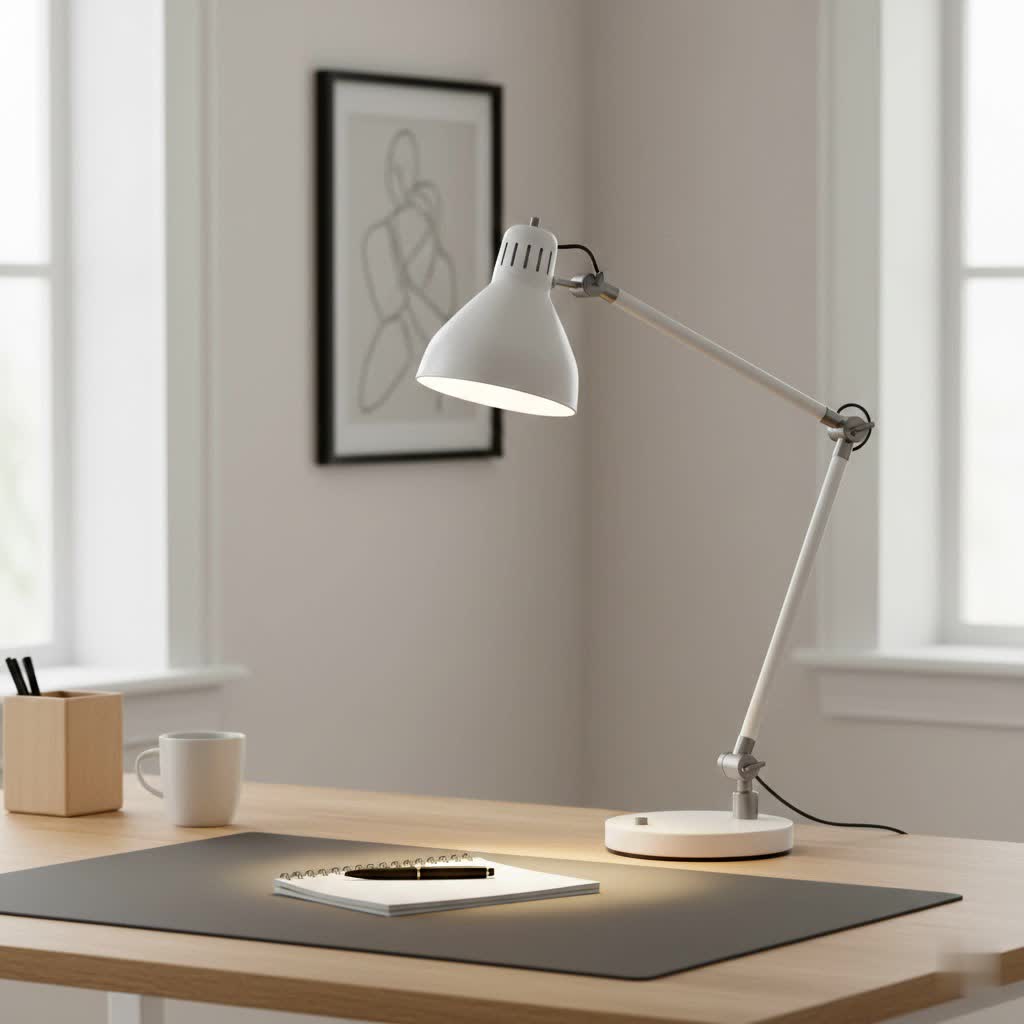
Why You Need a Desk Lamp?
Good lighting is paramount for maintaining focus and preventing eye strain during tasks that demand concentration, such as reading, writing, or working on a computer. Insufficient illumination can lead to a host of problems, including headaches, fatigue, and decreased productivity, as your eyes constantly struggle to adjust. A dedicated desk lamp provides targeted task lighting, directly illuminating your workspace without over-lighting the entire room, which helps to create an ergonomic setup that supports long hours of work without discomfort. By offering tailored brightness and light quality, desk lamps significantly improve visual comfort and protect your precious eyesight.
Popular Types of Desk Lamps
Desk lamps come in a diverse array of designs, each offering unique advantages for different tasks and aesthetic preferences. Understanding these types will help you narrow down the best fit for your personal workspace.
- Adjustable Arm Lamps (Swing Arm and Gooseneck): These lamps are renowned for their flexibility. Swing-arm lamps feature multiple pivot points, allowing for extensive reach and precise positioning of light over a large area. Gooseneck lamps, with their flexible necks, offer similar adjustability, letting you direct light exactly where it’s needed with ease. They are ideal for tasks requiring dynamic lighting.
- Clip-on/Clamp Lamps: Perfect for smaller desks or areas where surface space is limited, these lamps securely attach to the edge of your desk, shelf, or monitor. They free up valuable desktop real estate while still providing focused illumination.
- Architect Lamps: Often characterized by their spring-balanced, articulated arms, architect lamps provide extensive flexibility and a wide range of motion. They are a favorite among designers, artists, and engineers due to their precision and stability.
- Banker’s Lamps: With their classic, often green-shaded design, banker’s lamps offer a traditional aesthetic. They typically provide diffused, focused illumination, ideal for reading and a touch of vintage charm.
- Magnifying Lamps: For intricate work, hobbies, or those with vision impairments, magnifying desk lamps integrate a magnifying glass with a light source, allowing for close-up inspection and detailed tasks with enhanced clarity.
- Modern LED Desk Lamps: While LED refers to the bulb type, many contemporary desk lamps are designed specifically around LED technology, offering sleek profiles, advanced features like touch controls, and integrated lighting panels.
Key Factors When Choosing a Desk Lamp
Selecting the right desk lamp involves more than just picking a design you like. Several technical and functional considerations will ensure your lamp truly enhances your workspace and supports your eye health.
Bulb Type
The heart of any lamp is its bulb, and the technology behind it significantly impacts performance and efficiency.
- LED (Light Emitting Diode): LEDs are the gold standard for modern desk lamps. They are incredibly energy-efficient, boast an exceptionally long lifespan, and produce very little heat. Crucially, high-quality LED lamps can be flicker-free and offer excellent Color Rendering Index (CRI) and adjustable color temperature, which are vital for eye comfort.
- Halogen: These bulbs provide bright, crisp, natural-looking light, making them suitable for detailed reading. However, they generate more heat and consume more energy than LEDs.
- Fluorescent (CFL – Compact Fluorescent Lamp): CFLs are more energy-efficient than incandescent bulbs and offer uniform lighting. Some older or lower-quality CFLs, however, can be prone to flickering.
- Incandescent: Known for producing a warm, cozy light, incandescent bulbs are less energy-efficient and have a shorter lifespan. They are often chosen for ambient or decorative purposes rather than intensive task lighting.
|
Our Picks for the Best Desk Lamp in 2026
We may earn a commission when you use one of our links to make a purchase.
|
||
| Num | Product | Action |
|---|---|---|
| 1 | LED Desk Lamp for Office Home, Eye-Caring Desk Light with Stepless Dimming Adjustable Flexible Gooseneck, 10W USB Adapter Desk Lamp with Clamp for Reading, Study, Workbench (Pink) |

|
| 2 | Desktop Lamp 10X Magnification Magnifying Glass with Light and Stand with 360 Degree Adjustable Detachable Desktop Magnifier Suitable for Reading, Repairs, Crafts, and Close Work and More |
|
| 3 | LED Desk Lamp with Clamp, Eye-Caring Clip on Lights for Home Office, 3 Modes 10 Brightness, Long Flexible Goose-Neck, Metal, Swing Arm Architect Task Table Lamps with USB Adapter, Black |
|
| 4 | LED Desk Lamp with Clamp, Architect Desk Lamp for Home Office with Remote, 24W Ultra-Bright Desk Light with Stepless Dimming and Stepless Color Temp, Memory Function for Study and Workbench |
|
| 5 | LED Desk Lamp for Office Home, Eye-Caring Desk Light with Stepless Dimming Adjustable Flexible Gooseneck, 10W USB Adapter Desk Lamp with Clamp for Reading, Study, Workbench (White) |
|
| 6 | LED Desk Lamp for Office Home, Power Strip with 3 Outlets 4 USB Charging Ports(2 USBC), 4 Modes 5 Level Brightness Desk Light, Small Desk Lamp for College Dorm Room Essentials |
|
| 7 | LED Desk Lamp for Office Home, Eye-Caring Desk Light with Stepless Dimming Adjustable Flexible Gooseneck, 10W USB Adapter Desk Lamp with Clamp for Reading, Study, Workbench (Grey) |
|
| 8 | LED Desk Lamp for Office Home, Eye-Caring Desk Light with Stepless Dimming Adjustable Flexible Gooseneck, 10W USB Adapter Desk Lamp with Clamp for Reading, Study, Workbench (Black) |
|
| 9 | Micomlan Led Desk Lamp with Clamp, Architect Desk Lamp for Home Office with Atmosphere Lighting, 24W Ultra Bright Auto Dimming Computer Light Stepless Dimming and Tempering LED Table Light |
|
| 10 | LED Desk Lamp with Clamp, Eye-Caring Clip on Lights for Home Office, 3 Modes 10 Brightness, Long Flexible Goose-Neck, Metal, Swing Arm Architect Task Table Lamps with USB Adapter, White |
|
Wattage and Brightness (Lumens)
The brightness of your lamp, measured in lumens, should match your task. For general task lighting, a lamp providing around 50 lumens per square foot is a good starting point. However, it’s not about “higher is always better.” Excessive brightness can cause glare and eye strain. Look for lamps with adjustable brightness or dimming capabilities to customize the light intensity according to your activity and ambient conditions.
Color Temperature (CCT – Kelvin)
Color temperature, measured in Kelvin (K), describes the hue of the light.
- Warm Light (2500K-2900K): Has a yellowish or orange tint, ideal for relaxation, reading for pleasure, or creating a cozy atmosphere.
- Neutral White (3000K-3500K): A balanced light, good for general tasks and comfortable viewing.
- Cool White/Daylight (4000K-6500K): Mimics natural daylight with a bluish-white hue. This range is best for concentration, intricate tasks, and office work as it promotes alertness. Aim for 3000K-5000K for most office environments.
Color Rendering Index (CRI)
CRI measures a light source’s ability to reveal the true colors of objects compared to natural daylight. A higher CRI (on a scale of 0-100) means more accurate color representation. For tasks involving colors, such as art, design, or even just reading colored charts, a CRI of over 80 is recommended, with a CRI above 90 considered excellent.
Design and Style
Beyond functionality, a desk lamp should complement your workspace aesthetics.
- Aesthetics: Choose a style that harmonizes with your office or room décor, whether it’s minimalist, industrial, traditional, or contemporary.
- Materials and Durability: Consider the lamp’s construction materials (metal, wood, plastic, ceramic) for durability and how they contribute to the overall look.
- Size and Footprint: For small desks, select lamps with compact bases or clamp mounts to preserve precious surface area. For larger desks, a lamp with an extended reach, like an architect or swing-arm design, ensures full coverage. The bottom of the lampshade should ideally be at eye level when seated to prevent glare.
Additional Features
Many modern desk lamps offer features that enhance convenience and functionality.
- Adjustability: Look for lamps with multi-directional heads, flexible goosenecks, or swing arms to direct light precisely.
- Flicker-free & Anti-Glare: These are critical for eye comfort, especially during extended use. Flicker-free LEDs reduce eye fatigue, while anti-glare designs minimize reflections on screens and glossy surfaces.
- Auto-Dimming/Sensors: Some advanced lamps include ambient light sensors that automatically adjust brightness throughout the day, providing optimal lighting conditions without manual intervention.
- USB Charging Ports: Integrated USB-A or USB-C ports offer convenient charging for your phone, tablet, or other devices, reducing cable clutter.
- Smart Features: Voice control, app integration, and programmable timers are available in smart lamps, offering ultimate control and customization.
How to Buy a Desk Lamp
Navigating the myriad options can be daunting, but a systematic approach will ensure you make the best choice.
- Identify Your Primary Need: Are you buying it for intensive task lighting, ambient illumination, reading, or purely decorative purposes? Your primary use case will dictate many of your choices.
- Assess Your Workspace: Consider the size of your desk, the room’s overall lighting, and any existing decor. This will help determine the appropriate lamp type, size, and style.
- Prioritize Eye Health: If you spend long hours at your desk, prioritize features like flicker-free LED technology, high CRI, and adjustable color temperature to protect your eyes.
- Compare Features and Price: Make a list of essential features and compare models within your budget. Remember that investing in a high-quality lamp can save you from eye strain and discomfort in the long run.
- Check Warranty and Reviews: Purchase from reputable brands and retailers. Read user reviews to gauge real-world performance and durability, and always check the warranty for peace of mind.
Top Desk Lamp Designs for Optimal Performance
While specific models change frequently, certain designs consistently deliver superior performance based on user needs:
- The Ergonomic Architect Lamp: These are often praised for their robust, multi-jointed arms that allow for unparalleled flexibility and reach. They are ideal for professionals who need to direct light across large work surfaces and maintain precise positioning.
- The Advanced LED Smart Lamp: Characterized by sleek, minimalist designs, these lamps typically feature integrated LED panels with touch controls, multiple brightness levels, and adjustable color temperatures. Many also include smart capabilities like app control, USB charging, and auto-dimming sensors, making them perfect for tech-savvy users seeking maximum convenience and customization.
- The Space-Saving Clamp Lamp: Essential for compact desks or minimalist setups, these lamps free up valuable surface area by clamping directly to the edge of your workstation. High-quality versions offer flexible goosenecks or adjustable arms for directed light, providing efficiency without clutter.
- The Eye-Caring Full Spectrum Lamp: Designed with eye health in mind, these lamps typically boast high CRI and flicker-free LED technology, mimicking natural daylight. They often come with glare-reducing diffusers and a wide range of color temperature adjustments, making them suitable for anyone concerned about visual fatigue during prolonged use.
Tips for Using and Maintaining Your Desk Lamp
Once you’ve chosen your ideal desk lamp, a few simple practices will ensure its longevity and optimal performance.
- Optimal Placement: Position your lamp to illuminate your task directly without creating glare on your screen or in your eyes. For right-handed individuals, place the lamp on the left side of your workspace, and vice-versa for left-handed individuals, to avoid shadows while writing. The light source should ideally be just above or to the side of your eye level.
- Regular Cleaning: Dust can accumulate on the lampshade and bulb, reducing light output. Gently wipe down your lamp with a soft, dry cloth regularly. For shades, follow manufacturer instructions.
- Bulb Replacement (if applicable): While LED bulbs have a very long lifespan, if your lamp uses traditional bulbs, replace them as recommended by the manufacturer. Always use the correct wattage and bulb type.
- Care for Adjustable Components: If your lamp has swing arms or goosenecks, handle them gently to prevent wear and tear on the joints. Avoid forcing movements beyond their intended range.
Conclusion
Choosing the right desk lamp is an investment in your productivity, comfort, and eye health. By carefully considering factors such as bulb type, brightness, color temperature, design, and additional features, you can find a lighting solution that perfectly matches your needs and enhances your daily tasks. A thoughtful choice will not only illuminate your workspace but also inspire greater focus and well-being. What features are most important to you in a desk lamp?
Frequently Asked Questions
What is the ideal color temperature for a desk lamp?
For general tasks and concentration, a color temperature between 4000K and 5000K (cool white to daylight) is often recommended as it mimics natural daylight and promotes alertness. For more relaxed reading or a cozier ambiance, 2700K to 3000K (warm white) is suitable.
How bright should a desk lamp be?
The ideal brightness depends on the task and ambient lighting. For focused reading or writing, around 500-1000 lumens is generally effective. However, adjustable brightness settings are crucial so you can tailor the light level to prevent glare and eye strain in various conditions.
Are LED desk lamps truly better for your eyes?
Yes, high-quality LED desk lamps are generally considered better for your eyes. They are designed to be flicker-free, which reduces eye fatigue, and often offer excellent Color Rendering Index (CRI) and adjustable color temperature, allowing for customizable, comfortable illumination that closely mimics natural light.
How do I position my desk lamp to avoid glare?
To avoid glare, position your desk lamp to the side of your dominant hand (e.g., to the left if you’re right-handed) so that shadows do not fall on your work. The light source itself should be outside your direct line of sight, and if possible, use a lamp with an anti-glare diffuser.
What’s the difference between a table lamp and a desk lamp?
While often used interchangeably, a “desk lamp” is typically designed with specific task-oriented features like adjustable arms, focused light output, and ergonomic considerations for work or study. A “table lamp” can be more general, often used for ambient lighting or decorative purposes on any table surface, not necessarily a workspace.