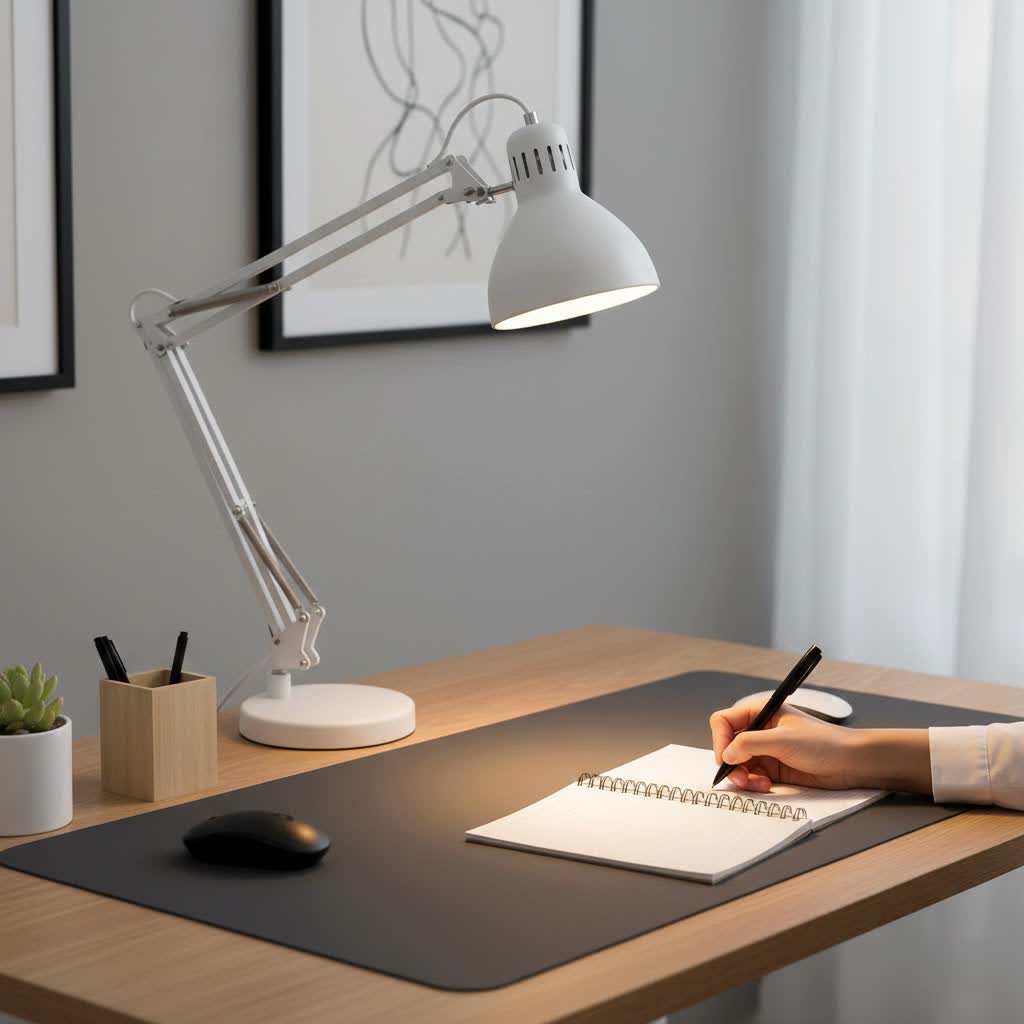
In a world increasingly focused on intricate details, the humble desk lamp has evolved. For anyone who routinely grapples with small print, delicate crafts, or precision tasks, the limitations of standard lighting become painfully clear. This is where a magnifying desk lamp steps in, transforming your workspace into a realm of clarity and comfort. It’s more than just a light source; it’s an indispensable tool designed to eliminate eye strain, reveal hidden details, and empower you to work with unparalleled accuracy.
This comprehensive guide will illuminate why a magnifying desk lamp is a game-changer, who stands to benefit most, and the crucial features to consider when selecting the perfect model for your needs.
Why You Need a Magnifying Desk Lamp
|
Our Picks for the Best Desk Lamp in 2026
We may earn a commission when you use one of our links to make a purchase.
|
||
| Num | Product | Action |
|---|---|---|
| 1 | LED Desk Lamp for Office Home, Eye-Caring Desk Light with Stepless Dimming Adjustable Flexible Gooseneck, 10W USB Adapter Desk Lamp with Clamp for Reading, Study, Workbench (White) |

|
| 2 | LED Desk Lamp with Clamp, Eye-Caring Clip on Lights for Home Office, 3 Modes 10 Brightness, Long Flexible Goose-Neck, Metal, Swing Arm Architect Task Table Lamps with USB Adapter, Black |
|
| 3 | Desktop Lamp 10X Magnification Magnifying Glass with Light and Stand with 360 Degree Adjustable Detachable Desktop Magnifier Suitable for Reading, Repairs, Crafts, and Close Work and More |
|
| 4 | LED Desk Lamp for Office Home, Power Strip with 3 Outlets 4 USB Charging Ports(2 USBC), 4 Modes 5 Level Brightness Desk Light, Small Desk Lamp for College Dorm Room Essentials |
|
| 5 | LED Desk Lamp with Clamp, Eye-Caring Clip on Lights for Home Office, 3 Modes 10 Brightness, Long Flexible Goose-Neck, Metal, Swing Arm Architect Task Table Lamps with USB Adapter, White |
|
| 6 | Micomlan Led Desk Lamp with Clamp, Architect Desk Lamp for Home Office with Atmosphere Lighting, 24W Ultra Bright Auto Dimming Computer Light Stepless Dimming and Tempering LED Table Light |
|
| 7 | LED Desk Lamp for Office Home, Eye-Caring Desk Light with Stepless Dimming Adjustable Flexible Gooseneck, 10W USB Adapter Desk Lamp with Clamp for Reading, Study, Workbench (Pink) |
|
| 8 | LED Desk Lamp for Office Home, Eye-Caring Desk Light with Stepless Dimming Adjustable Flexible Gooseneck, 10W USB Adapter Desk Lamp with Clamp for Reading, Study, Workbench (Grey) |
|
| 9 | LED Desk Lamp for Office Home, Eye-Caring Desk Light with Stepless Dimming Adjustable Flexible Gooseneck, 10W USB Adapter Desk Lamp with Clamp for Reading, Study, Workbench (Black) |
|
| 10 | LED Desk Lamp with Clamp, Architect Desk Lamp for Home Office with Remote, 24W Ultra-Bright Desk Light with Stepless Dimming and Stepless Color Temp, Memory Function for Study and Workbench |
|
Have you ever found yourself squinting at tiny components, struggling to thread a needle, or experiencing a headache after prolonged close-up work? These are common indicators that your current lighting setup isn’t adequate. A magnifying desk lamp addresses these challenges head-on by combining powerful, focused illumination with precise magnification.
The primary benefit is a dramatic reduction in eye strain and fatigue. By enlarging your work, these lamps allow your eyes to relax, preventing the discomfort and potential long-term vision issues associated with sustained close focusing. They also enhance precision, bringing even the most minute features into sharp, clear focus, which drastically reduces errors in detailed tasks. Furthermore, the hands-free design means both your hands are free to manipulate objects, solder wires, or stitch fabric, leading to greater efficiency and enjoyment in your work. Many users also find that these lamps encourage better posture, as you no longer need to hunch over your work to see clearly.
Who Benefits Most from a Magnifying Desk Lamp?
The versatility of magnifying desk lamps makes them invaluable across a wide spectrum of users and applications. If your daily activities involve meticulous attention to detail, chances are you’ll find immense value in one of these specialized lamps.
For the Passionate Hobbyist: Whether you’re a keen crafter, a model enthusiast, or an avid reader, a magnifying desk lamp can elevate your experience. Sewers and embroiderers can easily see every stitch, while miniature painters can achieve flawless details. Book lovers with aging eyes or those who simply prefer larger text will find reading more comfortable and enjoyable. From fly tying to jewelry making, any hobby requiring fine motor skills and close observation becomes significantly easier and more enjoyable.
For the Dedicated Professional: Precision is paramount in many professions, and magnifying lamps are a staple in various fields. Jewelers and watchmakers rely on them to work with tiny mechanisms and intricate designs. Electronics repair technicians use them for soldering and inspecting circuit boards. Estheticians, scientists, and dental professionals depend on clear, magnified views for their detailed work. Even interior designers and architects find them useful for examining fabric swatches, wallpaper textures, and architectural blueprints with critical accuracy.
For Individuals with Vision Challenges: As we age, our eyes often require more light and magnification to see clearly. Magnifying desk lamps are a fantastic aid for individuals with presbyopia or other forms of low vision, helping them maintain independence and continue engaging in activities they love, from reading medication labels to intricate needlework. [cite: 5_search_1]
Key Features to Consider When Choosing a Magnifying Desk Lamp
Selecting the right magnifying desk lamp involves understanding several key features to ensure it perfectly matches your specific requirements.
Magnification Power (Diopter)
The core of any magnifying lamp is its lens, and its power is measured in “diopters.” A diopter indicates the curvature of the lens, which in turn determines the magnification level. To convert diopters to a “magnification X” value (how many times larger an object appears), use the common formula: (Diopter / 4) + 1 = Magnification X. For example, a 3-diopter lens offers 1.75x magnification, making objects appear 175% larger, while a 5-diopter lens provides 2.25x magnification (225% larger). [cite: 1_search_1]
It’s important to note the trade-off: higher magnification often means a smaller lens diameter, a reduced field of view, and a shorter working distance (the space between the lens and your object). For general reading or inspecting larger surfaces, a lower power (2x-4x or 3-5 diopters) is usually sufficient. For extremely fine detail, such as electronics repair or miniature work, a higher diopter (5x-10x or 15-36 diopters) might be necessary, but be prepared for a narrower viewing area. [cite: 5_search_1]
Lighting Type and Quality
The quality of light is as crucial as the magnification itself. A magnifying lens is useless in the dark, and superior lighting can even reduce the need for higher magnification. [cite: 4_browse_2]
- LED (Light Emitting Diode): Modern magnifying lamps almost exclusively feature LED lighting. LEDs are energy-efficient, produce minimal heat, and boast incredibly long lifespans, often lasting 20,000 to 50,000 hours. [cite: 1_search_4, 3_search_1] They provide bright, even illumination without the harsh shadows often cast by single-point light sources.
- Adjustable Brightness: Look for models with dimming capabilities, allowing you to customize the light intensity for different tasks and ambient conditions.
- Color Temperature Control: Some advanced lamps offer adjustable color temperatures (measured in Kelvin, K), typically ranging from warm white (around 3000K) to cool daylight (6000K-6500K). [cite: 1_search_4] This is particularly useful for tasks where true color representation is critical, such as painting, textiles, or jewelry appraisal.
- Shadow-Free Illumination: Lamps with LEDs arranged in a ring around the magnifying lens provide uniform, shadow-free lighting, which is ideal for detailed work. [cite: 3_browse_2]
Lens Material
The material of the magnifying lens significantly impacts clarity and durability.
- Glass Lenses: High-quality optical glass (sometimes referred to as “crown white optical glass”) provides superior clarity, minimal distortion, and excellent scratch resistance. While typically heavier and more expensive, glass lenses offer a premium viewing experience. [cite: 1_search_1, 3_search_1, 5_search_2]
- Acrylic Lenses: Lighter and more affordable than glass, acrylic lenses are generally scratch-resistant but may not offer the same level of optical clarity as high-grade glass.
Adjustability and Ergonomics
A truly effective magnifying desk lamp offers maximum flexibility to position both the light and the magnifier precisely where you need them.
- Flexible/Articulating Swing Arms: Multi-section arms that pivot, bend, and extend allow you to bring the lens close to your work without having to move your entire project or strain your body. [cite: 1_search_1, 1_search_2, 2_browse_1]
- Swivel and Tilt Head: A head that can swivel and tilt offers another layer of control, letting you fine-tune the viewing angle. [cite: 1_search_1]
- Height Adjustment: Some models feature height-adjustable stands, accommodating various users and workspaces.
- Hands-Free Design: The fundamental ergonomic advantage is keeping both your hands free for intricate tasks, greatly improving efficiency and comfort. [cite: 2_search_1, 2_browse_2]
Mounting Options
Consider how the lamp will integrate into your workspace.
- Weighted Base: Lamps with a heavy, stable base offer portability and can be moved around the desk easily without tipping over, even when the arm is extended. [cite: 1_search_4, 2_search_2]
- Clamp-On Mount: Ideal for saving desk space, a clamp-on lamp attaches securely to the edge of your table or workbench. This is a popular choice for dedicated workstations. [cite: 1_search_1, 3_search_1]
- Rolling Stand: Some larger models come with a rolling base, offering exceptional mobility for moving the lamp around a larger workspace or studio. [cite: 1_search_4]
Durability and Build Quality
Investing in a well-built lamp ensures longevity and stable performance. Look for models with rugged, metal armatures and sturdy friction hinges that hold their position securely without sagging or wobbling. [cite: 1_search_1, 4_search_1]
Top Magnifying Desk Lamps: A Comparative Overview
Choosing the “best” lamp depends heavily on your specific needs. Here’s a general comparison of types and what they offer:
| Feature/Model Type | Magnification (Diopter/X) | Lighting | Adjustability | Mounting | Ideal For |
|---|---|---|---|---|---|
| Basic Craft Lamp | 3-5 Diopter (1.75x-2.25x) | LED, fixed brightness | Gooseneck arm | Weighted base | Casual hobbies, reading |
| Professional Grade | 5-8 Diopter (2.25x-3x) | Dimmable LED, 3 color modes | Articulating arm, swivel head | Clamp or base | Electronics, jewelry, esthetics, fine art |
| High Power Detail | 10-20 Diopter (3.5x-5x) | Bright LED, adjustable | Shorter articulating arm | Clamp | Micro-components, extreme detail inspection |
| Versatile Workstation | 5 Diopter (2.25x) | Dimmable LED, daylight | Long, multi-position arm | Rolling base/clamp | Large projects, moving between workstations |
Tips for Using and Maintaining Your Magnifying Desk Lamp
To ensure your magnifying desk lamp provides years of optimal performance, follow these simple tips:
- Optimal Positioning: Experiment with the lamp’s arm and head to find the “sweet spot” where your work is clearly magnified and brightly lit without glare. Ensure the light falls directly on your task for shadow-free viewing.
- Clean the Lens Regularly: Dust and fingerprints can significantly impair clarity. Use a soft, lint-free cloth, ideally a microfiber cloth, and a gentle lens cleaning solution (or just water) to keep the lens pristine. Avoid abrasive cleaners.
- Respect the Arm Joints: While many lamps have durable arms, repeated forceful adjustments can wear out friction joints. Handle the arm gently and loosen thumbscrews before making major adjustments.
- Secure Mounting: If using a clamp-on model, ensure it’s securely fastened to a sturdy surface. For weighted bases, ensure it’s on a stable, flat surface to prevent accidental tipping.
- Leverage Light Settings: If your lamp has adjustable brightness or color temperature, use these features to your advantage. A brighter, cooler light might be best for intricate detail work, while a softer, warmer light could be more comfortable for extended reading.
Conclusion
A magnifying desk lamp is an indispensable tool, blending superior illumination with powerful magnification to transform how you approach detailed tasks. By alleviating eye strain and bringing hidden intricacies into sharp focus, it empowers hobbyists and professionals alike to achieve greater precision, comfort, and enjoyment in their work. From the subtle art of miniature painting to the precise demands of electronics repair, choosing the right magnifying lamp is an investment in your visual health and the quality of your output.
What specific projects or tasks in your life could be transformed by the clear vision and enhanced detail a magnifying desk lamp provides?