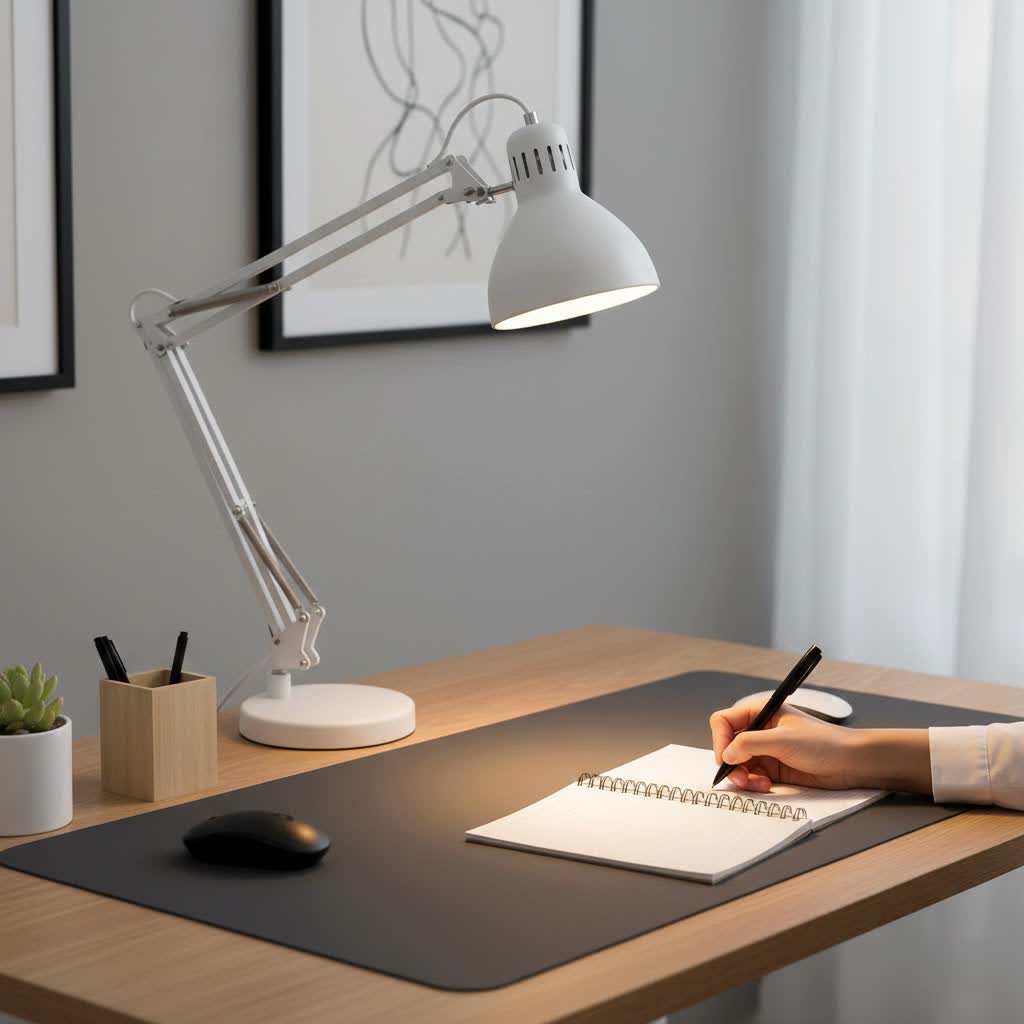
Choosing the right desk lamp for your child is more than just selecting a light source; it’s about investing in their health, academic performance, and overall well-being. A poorly chosen lamp can lead to eye strain, headaches, and a lack of concentration, turning study time into a struggle. In contrast, a well-designed children’s desk lamp provides optimal illumination, protects developing eyes, and creates an inviting space where learning and creativity can flourish. This comprehensive guide will illuminate the path to finding the perfect desk lamp that balances safety, functionality, and fun for your little scholar.
Why Your Child Needs a Dedicated Desk Lamp
|
Our Picks for the Best Desk Lamp in 2026
We may earn a commission when you use one of our links to make a purchase.
|
||
| Num | Product | Action |
|---|---|---|
| 1 | LED Desk Lamp for Office Home, Eye-Caring Desk Light with Stepless Dimming Adjustable Flexible Gooseneck, 10W USB Adapter Desk Lamp with Clamp for Reading, Study, Workbench (White) |

|
| 2 | Micomlan Led Desk Lamp with Clamp, Architect Desk Lamp for Home Office with Atmosphere Lighting, 24W Ultra Bright Auto Dimming Computer Light Stepless Dimming and Tempering LED Table Light |
|
| 3 | LED Desk Lamp for Office Home, Eye-Caring Desk Light with Stepless Dimming Adjustable Flexible Gooseneck, 10W USB Adapter Desk Lamp with Clamp for Reading, Study, Workbench (Pink) |
|
| 4 | LED Desk Lamp with Clamp, Eye-Caring Clip on Lights for Home Office, 3 Modes 10 Brightness, Long Flexible Goose-Neck, Metal, Swing Arm Architect Task Table Lamps with USB Adapter, Black |
|
| 5 | LED Desk Lamp with Clamp, Eye-Caring Clip on Lights for Home Office, 3 Modes 10 Brightness, Long Flexible Goose-Neck, Metal, Swing Arm Architect Task Table Lamps with USB Adapter, White |
|
| 6 | Desktop Lamp 10X Magnification Magnifying Glass with Light and Stand with 360 Degree Adjustable Detachable Desktop Magnifier Suitable for Reading, Repairs, Crafts, and Close Work and More |
|
| 7 | LED Desk Lamp for Office Home, Power Strip with 3 Outlets 4 USB Charging Ports(2 USBC), 4 Modes 5 Level Brightness Desk Light, Small Desk Lamp for College Dorm Room Essentials |
|
| 8 | LED Desk Lamp for Office Home, Eye-Caring Desk Light with Stepless Dimming Adjustable Flexible Gooseneck, 10W USB Adapter Desk Lamp with Clamp for Reading, Study, Workbench (Black) |
|
| 9 | LED Desk Lamp with Clamp, Architect Desk Lamp for Home Office with Remote, 24W Ultra-Bright Desk Light with Stepless Dimming and Stepless Color Temp, Memory Function for Study and Workbench |
|
| 10 | LED Desk Lamp for Office Home, Eye-Caring Desk Light with Stepless Dimming Adjustable Flexible Gooseneck, 10W USB Adapter Desk Lamp with Clamp for Reading, Study, Workbench (Grey) |
|
In today’s “Screen Generation,” children spend significant time in front of various electronic devices in addition to traditional books. Adequate lighting is crucial for mitigating the negative impacts of prolonged screen time and close-up work. A dedicated desk lamp ensures that the workspace is uniformly lit, reducing shadows and glare that can cause discomfort and fatigue. By providing focused, high-quality light, a desk lamp enhances productivity, protects delicate eyes from strain, and fosters an environment conducive to learning and creative activities. It helps prevent common issues like squinting, tired eyes, and even poor posture as children lean in to compensate for insufficient light.
Types of Children’s Desk Lamps
The world of desk lamps offers a variety of styles, each with its own advantages, suitable for different needs and desk setups.
- Gooseneck Desk Lamps: These lamps feature a flexible neck, allowing children to easily maneuver and rotate the light source to various positions. Their modern and attractive look combines well with functional benefits, making them a popular choice for adaptable lighting.
- Clip-on Desk Lamps: Ideal for smaller desks or areas where space is a premium, clip-on lamps can be securely clamped to the edge of a study desk. They are lightweight, compact, and save valuable surface area, and can be tucked away when not in use.
- Adjustable Arm Desk Lamps: Perfect for children who engage in art projects or tasks requiring different supplies spread across the table, these lamps allow for precise manipulation of the arm to focus illumination exactly where it’s needed.
- Organizer Desk Lamps: Designed for practicality, these lamps often integrate compartments for storing pens, pencils, rulers, and other stationery. They help keep a child’s workspace tidy and ensure essential tools are always within reach.
- Magnified Desk Lamps: For children who spend extended periods on detailed tasks, magnified desk lamps can be particularly helpful. They are designed to reduce fatigue and eye strain by providing magnification along with illumination.
Essential Factors When Choosing a Children’s Desk Lamp
Selecting the best desk lamp involves considering several critical features, with eye health and safety being paramount.
Light Source Technology: Which Bulb is Best?
The type of bulb significantly impacts light quality, energy consumption, and safety.
- LED (Light Emitting Diode): LEDs are the leading choice for children’s desk lamps due to their numerous benefits. They are highly energy-efficient, offer a long lifespan, and importantly, remain cool to the touch even after prolonged use, preventing accidental burns. Modern LED lamps also provide flicker-free and glare-free illumination, which is crucial for eye protection.
- Halogen: While providing clear and bright illumination, halogen bulbs generate considerable heat, posing a burn risk. They are less energy-efficient and typically not recommended for children’s use.
- Fluorescent (CFL): These bulbs offer high-contrast light similar to natural daylight but often lack dimmer features and contain mercury vapor, making disposal tricky and raising health concerns.
- Incandescent: Known for improved color definition and uniform light, incandescent bulbs have a very short lifespan and are inefficient, generating a lot of heat.
Power and Brightness: Illuminating the Task
The right amount of illumination is vital to prevent eye strain. While poor lighting may not permanently damage vision, it can cause immediate discomfort like fatigue and headaches.
- Illuminance (Lux): Measured in lux, illuminance refers to the amount of light received per unit area. For children’s study desks, an illuminance of around 500 lux at a vertical distance of 40 centimeters from the desk surface is recommended.
- Lumens: This measures the total light output. For task lighting, a range of 1000 to 1400 lumens is generally suitable. Many modern lamps come with dimmer switches, allowing adjustment to the ideal brightness for different activities.
- Wattage: For children aged 5-12, an LED lamp with 3-5 watts is often sufficient. Older children (13-24) might benefit from up to 5 watts.
Design and Style: Beyond Just Light
The aesthetic and build quality contribute to the lamp’s overall suitability.
- Sturdy Construction: A heavy, stable base and durable materials like wood and aluminum are essential to prevent the lamp from tipping over or breaking easily, especially with active children.
- Non-Toxic Materials: Always opt for lamps made from child-safe, non-toxic materials.
- Aesthetics: A lamp that matches the room’s decor or features a fun, engaging design can make the workspace more inviting for a child.
Eye-Care Features: Protecting Their Vision
This is arguably the most critical aspect of a children’s desk lamp.
- Flicker-Free Light: Invisible flicker can cause subconscious eye muscle strain, leading to headaches and difficulty concentrating. Choose lamps that provide a constant, stable stream of light.
- No Glare Design: Look for lamps that diffuse light to be soft and even, preventing harsh reflections on pages and screens that cause squinting.
- Color Temperature Control: The ability to adjust color temperature (measured in Kelvin) is a powerful wellness tool.
- Cool white light (e.g., 4200K – 6000K): Ideal for homework, arithmetic, and focused study, as it promotes alertness.
- Warm yellow light (e.g., 2700K – 3000K): Best for creative time, reading before bed, or relaxation, as it signals to the brain that it’s time to wind down without the stimulating effects of blue light.
- High CRI (>80Ra): A high Color Rendering Index ensures colors are accurately rendered, making learning materials and artwork clearer and more engaging.
- Blue Light Protection: Choose lamps that have passed the IEC Blue Light Hazard certification to ensure the light is safe for developing eyes.
- Adjustable Head and Arm: This allows for precise direction of the light source, customizing it to a child’s habits and needs, ensuring the light falls on the task and not directly into their eyes.
Supplementary Features: Enhancing Utility and Fun
Modern desk lamps often come with additional features that can improve usability and create a more engaging experience.
- Intuitive Controls: Simple touch-sensitive buttons or sliders are easier and more fun for children to use than complex knobs.
- USB Charging Ports: A convenient feature for charging tablets, phones, or other small devices, reducing clutter.
- Integrated Clock, Alarm, and Date Display: These can help children learn time management and build routines, turning the lamp into an interactive gadget.
- Night Light Function: A dedicated, multi-level night light provides a comforting glow for children who are nervous about the dark, without disturbing sleep.
- Timers: Features like a 45-minute auto-off timer for bedtime reading can help establish consistent routines and promote better sleep hygiene.
Top Models for Children’s Desk Lamps
When considering specific models, several stand out for their blend of features, safety, and performance.
| Model | Pros | Cons |
|---|---|---|
| BenQ eReading LED Desk Lamp | Advanced lighting, flicker-free, adjustable brightness/color temp, auto ambient light adjustment, desk clamps, durable. | Higher price point. |
| PHIVE LED Desk Lamp | Wide LED light bar, excellent coverage, 4 color temps, 5-level dimmer, memory function, flexible gooseneck. | May be too industrial for some children’s rooms. |
| AXX Cute Desk Light | Touch-activated, eye-protection, 3 brightness levels/color modes, space for stationery, lightweight, flexible gooseneck. | Simpler features compared to advanced models. |
| Dyson Solarcycle Morph Light | Intelligent LEDs adjust with daylight, app control, reduces eyestrain, 60-year LED life, high-quality light. | Very high price, potentially complex for younger children. |
| MindDuo 2 Kids Study Lamp | Ultrawide illumination, concealed light source (no direct glare), two reading modes, 30-minute break reminder. | Specific design, may not fit all aesthetics. |
How to Buy a Children’s Desk Lamp
- Define Your Child’s Needs: Consider their age, primary activities (reading, drawing, homework, screen time), and the size of their desk.
- Prioritize Eye Care and Safety: Always look for flicker-free, glare-free, low-blue-light LED lamps with sturdy construction and non-toxic materials.
- Check Adjustability: Ensure the lamp offers sufficient flexibility in height and angle to direct light effectively.
- Compare Features vs. Budget: Decide which additional features (USB ports, timers, smart controls) are most important for your child and your budget.
- Read Reviews: Look for feedback from other parents regarding durability, ease of use, and actual eye-comfort performance.
- Verify Warranty and Returns: Purchase from reputable retailers with good customer service and return policies.
Tips for Using and Maintaining Your Child’s Desk Lamp
- Optimal Placement: For right-handed children, place the lamp on the left side of the desk, and vice-versa for left-handed children, to prevent casting shadows while writing.
- Regular Cleaning: Gently wipe the lamp with a soft, dry cloth to remove dust. Avoid harsh chemicals that could damage the finish or electronic components.
- Teach Proper Handling: Encourage your child to adjust the lamp carefully, holding the base when moving adjustable parts, to extend its lifespan.
- Utilize Features: Encourage your child to use features like color temperature adjustment for different tasks or the timer for structured study breaks.
Conclusion
A children’s desk lamp is far more than just a light source; it is a fundamental tool for supporting their development, protecting their vision, and fostering a positive learning environment. By carefully considering eye-care features, safety standards, and practical functionalities, you can empower your child with a lighting solution that enhances their ability to focus, express creativity, and ultimately, thrive. Remember, the goal is to provide a gentle, steady, and adaptable light that grows with your child, ensuring their study space is always perfectly illuminated. What essential feature will you prioritize to light up your child’s academic journey?
Frequently Asked Questions
What is the ideal brightness for a child’s study lamp?
The ideal brightness for a child’s study lamp is typically around 500 lux at a distance of 40 centimeters from the desk surface. This level provides sufficient illumination for reading and writing without being overly intense, which can cause discomfort and eye strain. Many modern LED lamps offer adjustable brightness settings, allowing you to fine-tune the light to suit your child’s specific needs and the ambient light conditions in the room.
Are LED lamps safe for children’s eyes?
Yes, modern LED lamps specifically designed for eye protection are generally safe for children’s eyes. Look for LED lamps that are advertised as “flicker-free” and have “low blue light” certifications (like IEC Blue Light Hazard certification). These features minimize the harmful effects of flicker and excessive blue light, which can contribute to eye strain, headaches, and disrupted sleep patterns. LEDs also produce very little heat, eliminating the risk of burns.
What features should a children’s desk lamp have to protect their eyes?
To protect children’s eyes, a desk lamp should have flicker-free technology, a glare-free design that diffuses light evenly, and adjustable color temperature control. High Color Rendering Index (CRI >80Ra) is also important for accurate color perception. Additionally, look for models with certifications against blue light hazards and flexible adjustability to direct the light without causing shadows or direct glare.