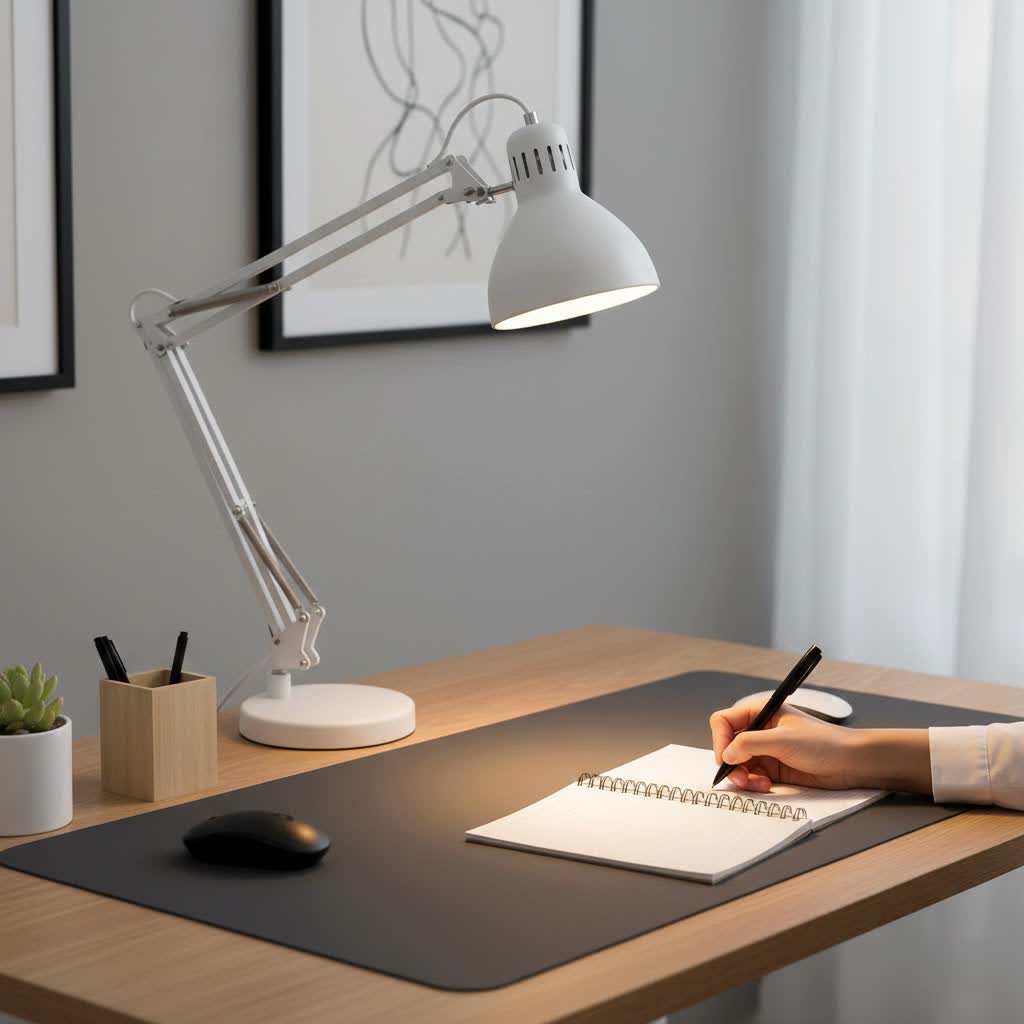
Have you ever found yourself squinting at your work, battling headaches, or rubbing tired eyes after a long session at your desk? You’re not alone. In our increasingly digital world, proper lighting is more crucial than ever for maintaining eye health and boosting productivity. A well-chosen desk lamp can be a game-changer, transforming your workspace from a source of strain into an oasis of focus and comfort.
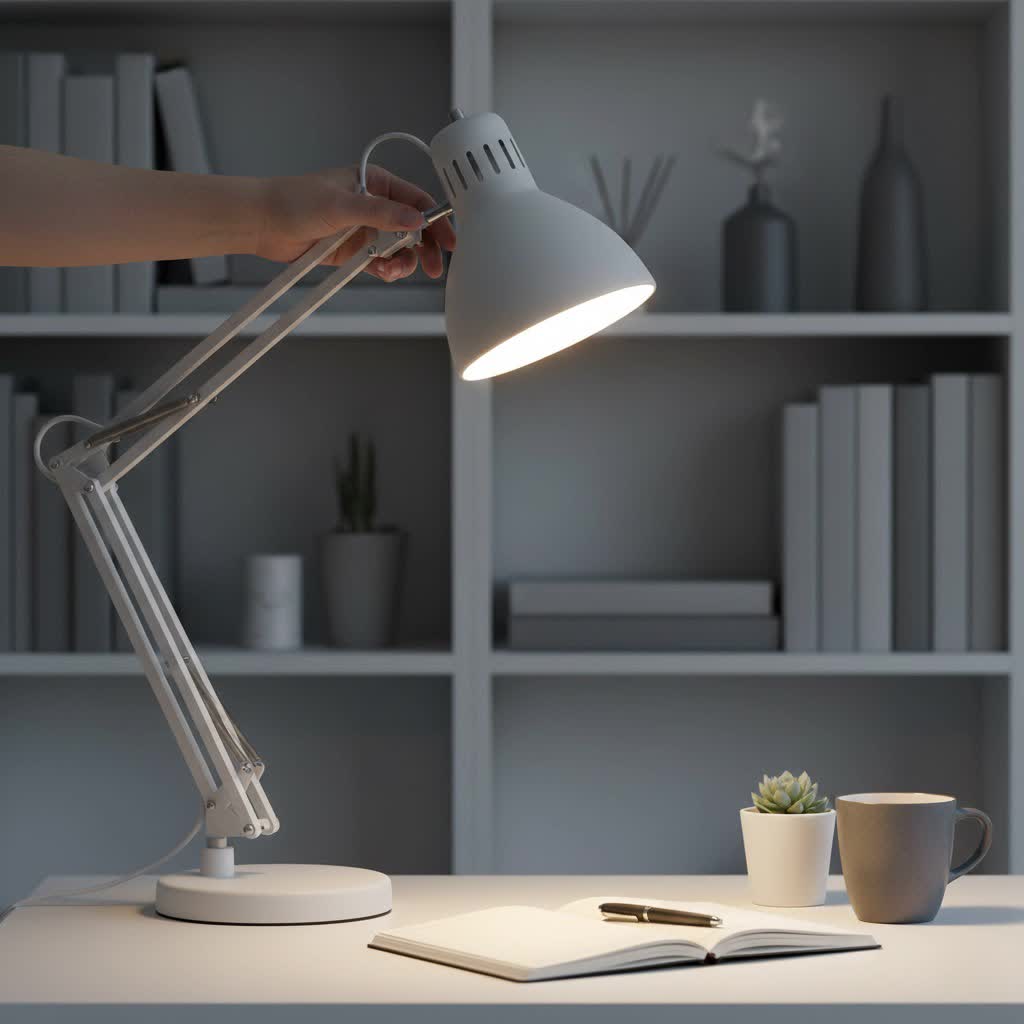
As a technician with over a decade of experience across classic to modern LED desk lamps, I’ve seen firsthand how the right illumination can make all the difference. This guide will share practical insights to help you navigate the world of desk lighting and select a lamp that truly cares for your eyes.
Why You Need an Eye-Caring Desk Lamp
Our eyes are constantly working, adapting to varying light conditions throughout the day. When lighting is inadequate or poorly designed, our eyes have to overcompensate, leading to a host of problems. Prolonged exposure to poor lighting can cause significant eye strain, often manifesting as dryness, blurry vision, headaches, and even migraines. This discomfort not only reduces your ability to focus but can also contribute to long-term visual impairment like myopia.
A high-quality desk lamp is more than just a light source; it’s an investment in your well-being. By providing optimal and evenly distributed light, it minimizes the effort your eyes exert, allowing them to work more comfortably and efficiently. This reduces physical fatigue and protects your vision, ensuring you can maintain concentration and productivity for extended periods without the usual strain.
Essential Types of Desk Lamps for Various Needs
Different tasks demand different lighting solutions. While the core principles of eye-caring lighting remain consistent, the design and features of desk lamps often cater to specific uses.
- Student Desk Lamps: Typically prioritize adjustable brightness and a compact design, suitable for late-night study sessions where focused, consistent light is paramount to avoid eye fatigue.
- Office Desk Lamps: Often feature broader illumination, advanced adjustability, and smart controls. These are designed for prolonged computer use and intricate paperwork, providing ample, non-glaring light for a diverse range of tasks.
- Reading Lamps: Emphasize warm, soft light to create a relaxing ambiance while minimizing glare on book pages, making them ideal for unwinding with a novel.
- Architect/Task Lamps: Characterized by highly flexible, multi-jointed arms and powerful, focused light. They are essential for precision tasks that require directing light exactly where needed, such as drafting, crafting, or intricate design work.
Understanding your primary use case will help narrow down the myriad options available, ensuring you pick a lamp that integrates seamlessly into your daily routine.
Key Factors When Choosing a Desk Lamp for Eye Health
Selecting a desk lamp that truly cares for your eyes goes beyond aesthetics. It involves understanding critical lighting specifications and features designed to minimize strain and enhance visual comfort.
The Power of LED Technology
|
Our Picks for the Best Desk Lamp in 2026
We may earn a commission when you use one of our links to make a purchase.
|
||
| Num | Product | Action |
|---|---|---|
| 1 | LED Desk Lamp for Office Home, Eye-Caring Desk Light with Stepless Dimming Adjustable Flexible Gooseneck, 10W USB Adapter Desk Lamp with Clamp for Reading, Study, Workbench (Grey) |

|
| 2 | LED Desk Lamp for Office Home, Eye-Caring Desk Light with Stepless Dimming Adjustable Flexible Gooseneck, 10W USB Adapter Desk Lamp with Clamp for Reading, Study, Workbench (Black) |
|
| 3 | LED Desk Lamp with Clamp, Eye-Caring Clip on Lights for Home Office, 3 Modes 10 Brightness, Long Flexible Goose-Neck, Metal, Swing Arm Architect Task Table Lamps with USB Adapter, Black |
|
| 4 | LED Desk Lamp for Office Home, Power Strip with 3 Outlets 4 USB Charging Ports(2 USBC), 4 Modes 5 Level Brightness Desk Light, Small Desk Lamp for College Dorm Room Essentials |
|
| 5 | Micomlan Led Desk Lamp with Clamp, Architect Desk Lamp for Home Office with Atmosphere Lighting, 24W Ultra Bright Auto Dimming Computer Light Stepless Dimming and Tempering LED Table Light |
|
| 6 | LED Desk Lamp with Clamp, Architect Desk Lamp for Home Office with Remote, 24W Ultra-Bright Desk Light with Stepless Dimming and Stepless Color Temp, Memory Function for Study and Workbench |
|
| 7 | LED Desk Lamp for Office Home, Eye-Caring Desk Light with Stepless Dimming Adjustable Flexible Gooseneck, 10W USB Adapter Desk Lamp with Clamp for Reading, Study, Workbench (White) |
|
| 8 | LED Desk Lamp for Office Home, Eye-Caring Desk Light with Stepless Dimming Adjustable Flexible Gooseneck, 10W USB Adapter Desk Lamp with Clamp for Reading, Study, Workbench (Pink) |
|
| 9 | Desktop Lamp 10X Magnification Magnifying Glass with Light and Stand with 360 Degree Adjustable Detachable Desktop Magnifier Suitable for Reading, Repairs, Crafts, and Close Work and More |
|
| 10 | LED Desk Lamp with Clamp, Eye-Caring Clip on Lights for Home Office, 3 Modes 10 Brightness, Long Flexible Goose-Neck, Metal, Swing Arm Architect Task Table Lamps with USB Adapter, White |
|
When it comes to eye-friendly lighting, LED (Light Emitting Diode) lamps are the gold standard. They are energy-efficient, long-lasting, and offer a wide range of features crucial for eye comfort. Unlike older bulb types, modern LEDs can be engineered to provide stable, uniform illumination with advanced controls. Always opt for LED, but ensure it incorporates the following features.
Brightness and Uniform Light Distribution
The right amount of light is crucial. Too dim, and your eyes strain to see; too bright, and you face glare and discomfort. For tasks like reading or prolonged computer use, a minimum illuminance of 500 Lux is often recommended. Look for lamps with adjustable brightness settings, allowing you to tailor the light intensity to your specific activity and ambient room light.
Equally important is uniform light distribution. A good desk lamp should illuminate your workspace evenly, preventing harsh contrasts, hotspots, or shadows that force your eyes to constantly readjust. Lamps with diffusion panels or wide-angle designs excel in this area.
Color Temperature (CCT) and Tunability
Color temperature, measured in Kelvin (K), describes the hue of the light. Different color temperatures impact alertness and eye comfort.
- Warm White (2700K-3000K): Emits a soft, yellowish light, similar to incandescent bulbs. This soothing light is ideal for relaxing, winding down in the evening, and casual reading, as it reduces eye strain and can improve sleep quality.
- Neutral White/Daylight (3500K-5000K): Mimics natural daylight. This range is excellent for tasks requiring focus, alertness, and accurate color perception, such as studying, working, or intricate hobbies. It enhances concentration without being overly harsh.
The best desk lamps offer “tunable” color temperature, allowing you to switch between warm and cool light to match your activity and the time of day, ensuring optimal visual comfort around the clock.
Flicker-Free Technology
One of the most insidious causes of eye strain is flicker, even if it’s imperceptible to the naked eye. Flickering lights, caused by rapid fluctuations in power supply, can lead to headaches, migraines, fatigue, and impaired visual performance over time. True flicker-free LED lamps maintain a consistent light output, providing steady, comfortable illumination that significantly reduces eye strain. Always look for lamps explicitly advertised as “flicker-free” to safeguard your visual comfort.
Glare Reduction
Glare, whether direct from the light source or reflected off surfaces, causes squinting and discomfort. An eye-friendly desk lamp incorporates features to minimize glare. This includes well-designed diffusion panels that soften and spread the light, as well as adjustable lamp heads and arms that allow you to direct the light away from your eyes and reflective surfaces on your desk or screen.
Low Blue Light Emission
Excessive exposure to high-intensity blue light, particularly from screens and some LEDs, has been linked to eye strain, retinal damage, and disruption of circadian rhythms, impacting sleep. While some blue light is natural during the day, look for LED desk lamps designed to emit low blue light, often complying with safety standards like IEC 62471 Risk Group 0 (RG0) for no photobiological risk. This helps protect your eyes, especially during extended use.
High Color Rendering Index (CRI)
The Color Rendering Index (CRI) measures how accurately a light source reveals the true colors of objects compared to natural sunlight. A high CRI is vital for tasks requiring color accuracy, such as design, art, or even just reading colored charts. Lamps with a CRI of 80 or above are generally good, but for optimal visual comfort and fidelity in strenuous visual tasks, aim for a CRI of 90 or higher. This ensures colors appear vibrant and true to life, reducing eye fatigue from distorted hues.
Adjustability and Ergonomics
A desk lamp with a flexible design – including an adjustable arm, rotating head, and stable base – is crucial for ergonomic lighting. This allows you to position the light precisely where needed, eliminating shadows and directing illumination onto your task without creating glare on your screen or reading material. The ability to customize light direction is a fundamental aspect of eye comfort.
Essential vs. Optimal Features for Eye Comfort
Choosing the right desk lamp can feel overwhelming with all the technical specifications. Here’s a quick comparison to help you prioritize features based on your needs for eye comfort:
| Feature Category | Basic Eye Care | Enhanced Eye Comfort | Optimal Eye Protection |
|---|---|---|---|
| Brightness | Fixed | Adjustable (multiple levels) | Dimmable (fine-tuned) |
| Color Temp. | Fixed (e.g., 4000K) | Selectable (2-3 presets) | Tunable (wide range, 2700K-5000K+) |
| Flicker | May have imperceptible flicker | Minimal flicker | Certified Flicker-Free |
| Glare Control | Basic diffuser | Good diffusion, adjustable head | Advanced diffusion, wide illumination |
| Blue Light | Standard LED | Reduced blue light | Low Blue Light (RG0) |
| CRI | >80 | >85 | >90 |
| Adjustability | Basic tilt | Flexible arm, rotating head | Multi-axis articulation, wide reach |
“The subtle nuances in a lamp’s light quality—from flicker rates to color rendering—can profoundly impact your long-term eye health and overall well-being.” – Reviewepedia Admin, Senior Desk Lamp Technician
Tips for Using and Maintaining Your Desk Lamp
Even the best desk lamp requires thoughtful usage and care to provide optimal eye protection.
- Proper Placement: For right-handed individuals, position the lamp on your left to prevent shadows from your hand falling on your work. Reverse this for left-handed individuals. Ensure the light illuminates your task directly but avoids shining into your eyes or creating screen glare.
- Combine with Ambient Light: Your desk lamp should supplement, not replace, ambient room lighting. Working in a completely dark room with only a bright desk lamp creates high contrast that can strain your eyes. Ensure the overall room is softly lit to balance the illumination.
- Take Regular Breaks: The 20-20-20 rule is a great habit: every 20 minutes, look at something 20 feet away for 20 seconds. This helps relax your eye muscles and reduce digital eye strain.
- Clean Your Lamp Regularly: Dust and grime can accumulate on diffusers and bulbs, reducing light output and altering its quality. A quick, gentle wipe-down with a soft cloth will keep your lamp performing at its best.
- Adjust as Needed: Don’t set your lamp once and forget it. Adjust brightness and color temperature throughout the day to match natural light changes and your current tasks.
Conclusion
Choosing a desk lamp good for your eyes is an essential step towards creating a healthier, more productive workspace. By prioritizing features like flicker-free technology, adjustable brightness and color temperature, effective glare reduction, low blue light emission, and a high Color Rendering Index, you can significantly reduce eye strain and protect your vision for years to come. Remember, your eyes are invaluable, and the right lighting is a small but powerful investment in their well-being.
What specific features have you found most beneficial in your quest for eye-friendly desk lighting?
Frequently Asked Questions
What color temperature is best for studying to avoid eye strain?
For studying and focused tasks, a neutral white light in the range of 3500K to 5000K is generally recommended. This color temperature mimics natural daylight, which can enhance alertness and concentration while minimizing eye fatigue, making it ideal for prolonged academic or work sessions.
Are LED desk lamps bad for your eyes?
No, LED desk lamps are not inherently bad for your eyes; in fact, they are often the best choice when selected carefully. Modern LEDs with features like low blue light emission (RG0 standard), flicker-free technology, and high CRI (90+) are designed specifically to protect vision and enhance comfort.
How many lumens should a desk lamp have for eye health?
For effective reading and writing, look for a desk lamp that can provide at least 400-500 lumens. However, adjustable brightness is more crucial than a fixed high lumen count, allowing you to fine-tune the light intensity to your specific task and avoid excessive brightness or dimness that can cause eye strain.
What is “flicker-free” in a desk lamp?
“Flicker-free” refers to lighting technology that eliminates rapid, often imperceptible, fluctuations in light output. These subtle flickers can cause headaches, eye fatigue, and reduced concentration over time. A flicker-free lamp provides a steady, consistent stream of light, significantly enhancing visual comfort.
Why is Color Rendering Index (CRI) important for eye comfort?
CRI measures a light source’s ability to accurately reveal the true colors of objects. A high CRI (80+, ideally 90+) means colors appear more vibrant and true to life, similar to natural daylight. This reduces the effort your eyes exert to distinguish colors and details, thereby minimizing eye strain and fatigue, especially for visually demanding tasks.