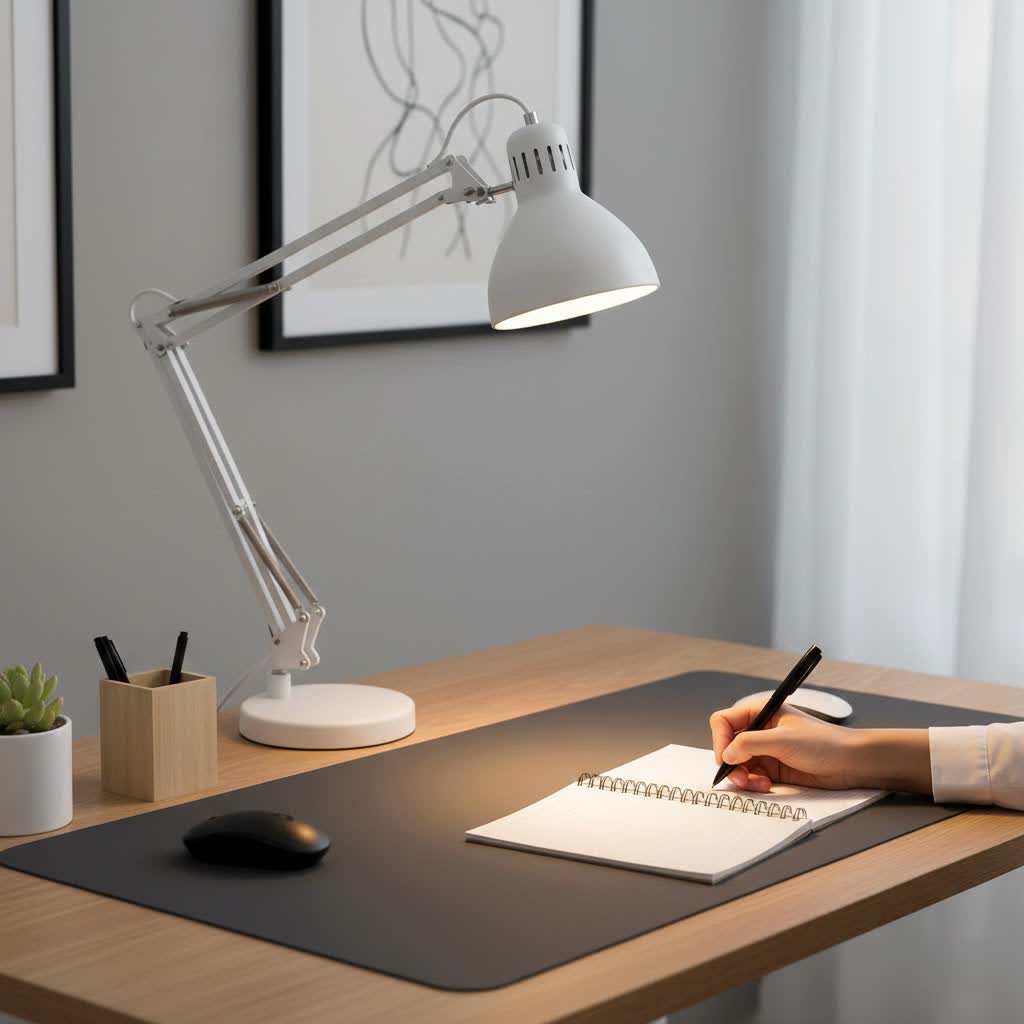
For decades, Halogen Desk Lamps have been a cornerstone of effective task lighting, illuminating countless workspaces with their distinctive glow. As an experienced lighting technician, I’ve seen firsthand how these lamps, from classic designs to modern interpretations, offer a unique set of benefits. While newer technologies like LED have emerged, understanding the specific qualities of halogen can help you determine if this traditional light source is the perfect fit for your precise needs and aesthetic preferences. Let’s delve into the world of halogen desk lamps and discover their enduring appeal.
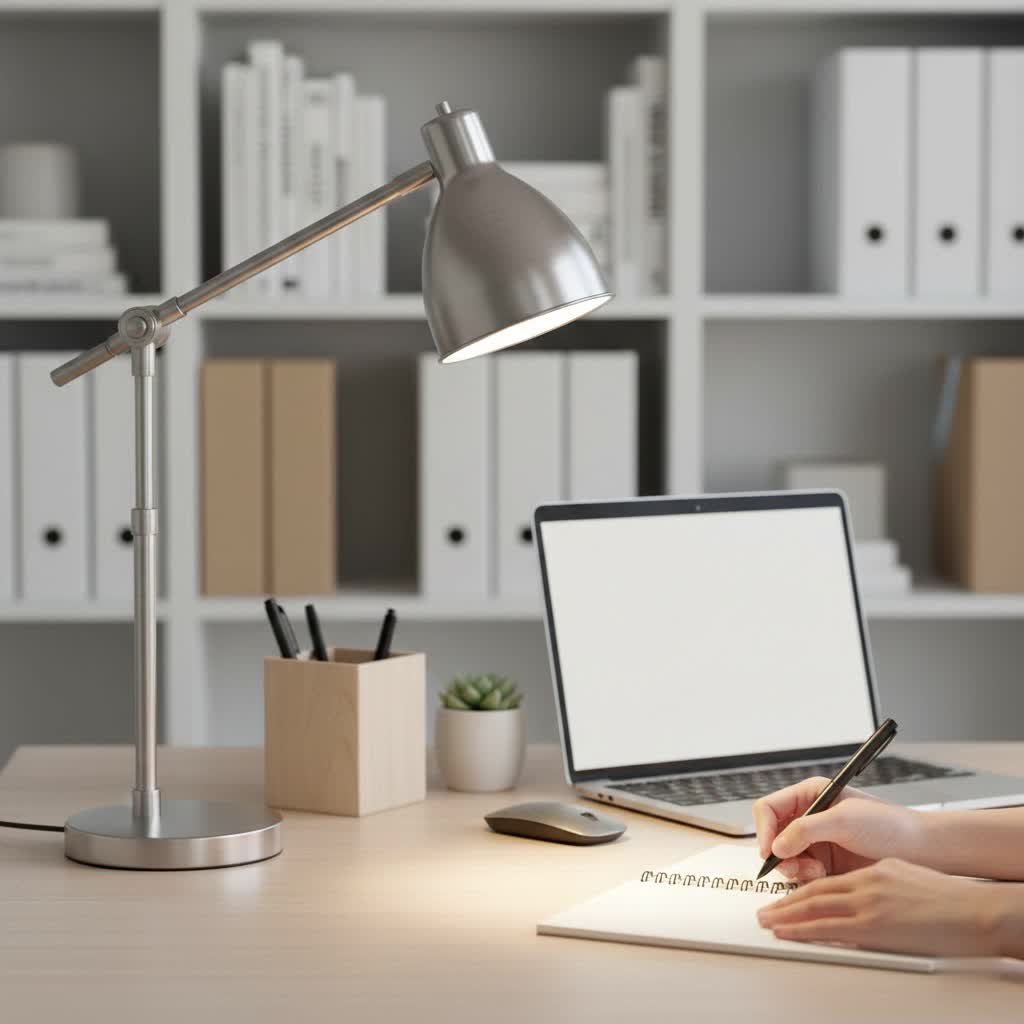
Desk Lamps: The Ultimate Guide to Illumination
Proper lighting is not just about visibility; it’s a critical element for both productivity and eye health. Insufficient or poorly directed light can lead to eye strain, headaches, and decreased concentration, turning essential tasks into a struggle. A dedicated desk lamp, however, transforms your workspace, providing the focused illumination needed to tackle detailed work, read extensively, or engage in creative projects without fatigue. It’s an investment in your well-being and efficiency.
Understanding Desk Lamp Light Sources: A Closer Look at Halogen
|
Our Picks for the Best Desk Lamp in 2026
We may earn a commission when you use one of our links to make a purchase.
|
||
| Num | Product | Action |
|---|---|---|
| 1 | LED Desk Lamp for Office Home, Eye-Caring Desk Light with Stepless Dimming Adjustable Flexible Gooseneck, 10W USB Adapter Desk Lamp with Clamp for Reading, Study, Workbench (Black) |

|
| 2 | LED Desk Lamp with Clamp, Eye-Caring Clip on Lights for Home Office, 3 Modes 10 Brightness, Long Flexible Goose-Neck, Metal, Swing Arm Architect Task Table Lamps with USB Adapter, White |
|
| 3 | Micomlan Led Desk Lamp with Clamp, Architect Desk Lamp for Home Office with Atmosphere Lighting, 24W Ultra Bright Auto Dimming Computer Light Stepless Dimming and Tempering LED Table Light |
|
| 4 | LED Desk Lamp for Office Home, Eye-Caring Desk Light with Stepless Dimming Adjustable Flexible Gooseneck, 10W USB Adapter Desk Lamp with Clamp for Reading, Study, Workbench (White) |
|
| 5 | LED Desk Lamp for Office Home, Eye-Caring Desk Light with Stepless Dimming Adjustable Flexible Gooseneck, 10W USB Adapter Desk Lamp with Clamp for Reading, Study, Workbench (Grey) |
|
| 6 | LED Desk Lamp with Clamp, Eye-Caring Clip on Lights for Home Office, 3 Modes 10 Brightness, Long Flexible Goose-Neck, Metal, Swing Arm Architect Task Table Lamps with USB Adapter, Black |
|
| 7 | Desktop Lamp 10X Magnification Magnifying Glass with Light and Stand with 360 Degree Adjustable Detachable Desktop Magnifier Suitable for Reading, Repairs, Crafts, and Close Work and More |
|
| 8 | LED Desk Lamp with Clamp, Architect Desk Lamp for Home Office with Remote, 24W Ultra-Bright Desk Light with Stepless Dimming and Stepless Color Temp, Memory Function for Study and Workbench |
|
| 9 | LED Desk Lamp for Office Home, Eye-Caring Desk Light with Stepless Dimming Adjustable Flexible Gooseneck, 10W USB Adapter Desk Lamp with Clamp for Reading, Study, Workbench (Pink) |
|
| 10 | LED Desk Lamp for Office Home, Power Strip with 3 Outlets 4 USB Charging Ports(2 USBC), 4 Modes 5 Level Brightness Desk Light, Small Desk Lamp for College Dorm Room Essentials |
|
When choosing a desk lamp, the type of light source is paramount. Beyond the fixture itself, the bulb dictates the quality, intensity, and characteristics of the light. While LED and fluorescent lights offer modern alternatives, halogen bulbs represent a refined evolution of incandescent technology.
A halogen bulb is essentially an incandescent lamp with a crucial addition: a small amount of halogen gas (such as iodine or bromine) inside its capsule. This gas reacts with evaporating tungsten particles from the filament, redepositing them back onto the filament rather than allowing them to collect on the bulb’s interior. This “halogen cycle” allows the filament to operate at much higher temperatures than traditional incandescent bulbs, resulting in several key characteristics. This chemical process extends the bulb’s lifespan and maintains its brightness over time, preventing the blackening typically seen in older incandescent bulbs.
The Distinct Advantages of Halogen Desk Lamps
Despite the rise of newer lighting solutions, halogen desk lamps retain several compelling advantages, particularly for specific applications where light quality is paramount.
One of the most praised attributes of halogen lighting is its superior color rendering index (CRI) of 100. This means halogen light closely mimics natural daylight, allowing colors to appear true and vibrant without any yellow or blue tints. For tasks requiring meticulous color accuracy, such as art, graphic design, or detailed crafts, this impeccable color rendition is invaluable. Halogen’s crisp, white light can also significantly reduce eye strain during extended reading sessions, making text appear clear and sharp.
Another significant benefit is instant full brightness. Unlike some fluorescent or even early LED bulbs that require a warm-up period, halogen lamps provide maximum illumination the moment they are switched on. This immediate response is crucial for quick tasks or when you need consistent light without delay.
Furthermore, halogen lamps offer excellent dimming capabilities. They work seamlessly with standard dimmer switches, providing smooth, flicker-free brightness adjustment across their entire range. This precise control allows you to tailor the light intensity to your exact needs, whether it’s a bright spotlight for intricate work or a softer glow for ambient lighting. The compact size of halogen capsules also enables designers to create sleek, streamlined lamp designs with highly focused directional light, perfect for concentrating illumination exactly where it’s needed for reading or detailed tasks.
The Considerations and Disadvantages of Halogen Desk Lamps
While halogen desk lamps offer undeniable benefits, it’s equally important to understand their drawbacks, especially when comparing them to more modern alternatives.
The most significant consideration is high heat emission. Halogen bulbs operate at extremely high temperatures, often reaching 480-650°F during operation. This intense heat is a byproduct of their operating principle, where a large portion of energy is converted into heat rather than light. This means the lamp housing and shade can become very hot to the touch, posing a risk of burns if not handled carefully. It also necessitates proper ventilation and careful placement, as they can be a fire hazard if positioned too close to flammable materials like paper, fabrics, or curtains.
Energy consumption is another notable disadvantage. Halogen bulbs, while more efficient than traditional incandescent bulbs, consume significantly more energy than LED lamps. Approximately 80% of the energy consumed by a halogen bulb is converted into heat, with only about 20% emitted as visible light. This inefficiency translates to higher electricity bills, especially for lamps used frequently or for extended periods.
Moreover, halogen lamps have a shorter lifespan compared to LEDs. While they outlast standard incandescent bulbs, typically lasting 2,000 to 4,000 hours, this is considerably less than the 25,000 to 50,000+ hours offered by most LED bulbs. This difference means more frequent bulb replacements and associated costs. Finally, halogen bulbs can be sensitive to handling. The oils from your skin can create hot spots on the bulb’s surface, leading to premature failure, so wearing gloves when changing them is often recommended. Some sources also indicate they produce infrared (and potentially UV) radiation, which can be damaging to sensitive materials like artwork or fabrics over time.
Factors to Consider When Choosing a Desk Lamp
Selecting the right desk lamp involves weighing various factors, especially the bulb type, which dictates much of the lamp’s performance and suitability.
Bulb Type: Halogen, LED, or Fluorescent
Each bulb type offers distinct characteristics:
- Halogen: These bulbs provide exceptional light quality with a perfect CRI of 100, delivering crisp, white light ideal for tasks requiring true color rendition. They offer superior, flicker-free dimming and instant full brightness, making them excellent for focused work and reading. However, their significant heat output, lower energy efficiency, and shorter lifespan compared to LEDs are important considerations.
- LED (Light Emitting Diode): LEDs are the modern standard, excelling in energy efficiency (consuming up to 85% less energy than traditional incandescent bulbs) and offering an exceptionally long lifespan (tens of thousands of hours). They produce minimal heat, making them safe to touch and operate. Modern LEDs come with a wide range of color temperatures and often feature adjustable brightness and color settings. While their initial cost might be higher, long-term savings are substantial.
- Fluorescent (CFL): Compact Fluorescent Lamps (CFLs) offer better energy efficiency than older incandescent bulbs and a longer lifespan than halogen. However, they can have a warm-up period before reaching full brightness, and their light quality and color rendering often fall short of halogen or high-quality LEDs. Some users also report a subtle flicker, and they contain mercury, requiring special disposal.
Wattage and Brightness (Lumens)
For desk lamps, appropriate wattage (for older bulb types) or lumens (for modern bulbs) is crucial. Task lighting for reading or detailed work typically requires 400-600 lumens focused directly on the surface. Ambient lighting needs can range from 200-400 lumens. When considering a halogen lamp, typical options range from 20-50 watts, producing 300-800 lumens. Always match the brightness to your specific task to avoid eye strain or glare.
Design and Adjustability
Halogen lamps, with their compact bulb sizes, have historically allowed for very sleek and minimalist designs, often featuring adjustable arms and heads for precise light positioning. Look for sturdy construction, quality materials, and a design that complements your workspace aesthetic. Adjustability, such as a gooseneck or swing arm, is key for directing the intense, focused light of a halogen bulb exactly where you need it.
Additional Features
While halogen lamps typically focus on fundamental illumination, some modern fixtures may integrate features like dimmer switches (a strength for halogen), or less commonly, USB charging ports (more prevalent in LED designs). Ensure the lamp’s features align with your functional requirements.
Comparison of Lighting Technologies for Desk Lamps
Understanding the core differences between lighting technologies is key to making an informed decision for your desk lamp.
| Feature | Halogen | LED | Fluorescent |
|---|---|---|---|
| Light Quality | Excellent (CRI 100, crisp white, warm) | Very Good to Excellent (CRI 80-95+, varied CCT) | Good (discontinuous spectrum, varied CRI) |
| Brightness | Instant full brightness, focused | Instant, often brighter per watt | Can have warm-up time |
| Heat Emission | Very High (480-650°F, potential hazard) | Very Low (cool to touch) | Low to Moderate |
| Energy Efficiency | Low (16-24 lumens/watt) | Very High (80-100+ lumens/watt) | High (good improvement over incandescent) |
| Lifespan | Moderate (2,000-4,000 hours) | Very Long (25,000-50,000+ hours) | Long (8,000-15,000 hours) |
| Dimming | Superior, flicker-free | Good, but quality varies by driver/bulb; modern LEDs excel | Can be poor, may require special dimmers |
| Initial Cost (Bulb) | Lower | Higher, but decreasing | Moderate |
| Running Cost | High | Very Low | Low |
| Durability | Fragile (filament, heat sensitive, skin oils) | Very Durable (solid state) | Moderate (glass tubes) |
| Environmental | Contains halogens, high energy use | No mercury, highly energy efficient | Contains mercury, requires special disposal |
Selecting a Halogen Desk Lamp in Today’s Market
While the market is increasingly dominated by LED lighting, choosing a halogen desk lamp can still be the right decision for those who prioritize its unique strengths. If you decide a halogen lamp is for you, understanding what to look for is key.
Focus on your specific needs where halogen excels: if your work demands absolute color accuracy for art, photography, or design, or if you require unparalleled, flicker-free dimming performance, a halogen lamp is a strong contender. Prioritize safety features: given the high heat output, ensure the lamp has robust, heat-resistant materials and excellent ventilation. Look for designs that direct heat away from your hands and workspace. Consider the design and footprint carefully, as halogen lamps often boast compact and highly adjustable forms ideal for precise task lighting. While dedicated new halogen desk lamp models might be less prevalent, quality vintage or specialized models can still be found.
Expert Insights on Halogen Desk Lamps
“While LED technology has revolutionized lighting with its efficiency and longevity, halogen lamps still hold a unique place for tasks demanding impeccable color rendering and smooth, flicker-free dimming. They offer a quality of light that artists and detail-oriented professionals often prefer, proving that sometimes, classic technology still provides an unmatched experience.”
Tips for Using and Maintaining Your Halogen Desk Lamp
To ensure the longevity and safe operation of your halogen desk lamp, a few simple maintenance tips can make a big difference.
Firstly, safe placement and ventilation are paramount. Always position your halogen lamp away from flammable materials such as curtains, paper, or textiles. Ensure there is adequate space around the lamp head for heat to dissipate. Never cover the lamp, even temporarily. Secondly, proper handling of bulbs is crucial. When replacing a halogen bulb, always use gloves or a clean cloth to avoid touching the glass directly. Oils from your skin can cause uneven heating and lead to premature bulb failure. Gently insert the bulb into the socket, ensuring it’s secure. Finally, for cleaning and general care, make sure the lamp is unplugged and completely cool before wiping it down. Use a soft, dry cloth to remove dust from the fixture and a lint-free cloth for the bulb itself. Be mindful of the recommended wattage and bulb type for your specific lamp, and replace bulbs proactively when they begin to dim or flicker to maintain optimal performance.
Conclusion
Halogen desk lamps, with their ability to deliver exceptional light quality, perfect color rendering, and superior dimming, carve out a distinct niche in the world of task lighting. While innovations in LED technology have set new benchmarks for energy efficiency and lifespan, the unique qualities of halogen remain invaluable for those who prioritize precise, natural-looking illumination for detailed work. By understanding both their brilliant advantages and critical considerations, you can make an informed choice that perfectly aligns with your workspace needs and lighting preferences.
So, as you consider your next desk lighting solution, will the crisp, faithful light of a halogen lamp be the perfect partner for your tasks, or will the long-lasting efficiency of an LED lead the way?
Frequently Asked Questions
Are halogen desk lamps still a good choice for modern workspaces?
Halogen desk lamps can still be a good choice for modern workspaces, particularly for tasks requiring high color accuracy, such as design work or art, due to their perfect Color Rendering Index (CRI 100). They also offer superior dimming. However, their high heat output and lower energy efficiency compared to modern LED alternatives are key considerations.
How can I reduce the heat from my halogen desk lamp?
To reduce heat, ensure your halogen desk lamp is placed in a well-ventilated area, away from walls or enclosed spaces. Never cover the lamp, and always allow adequate clearance around the bulb. Opt for the lowest wattage bulb that still provides sufficient light for your task to minimize heat generation.
Do halogen lamps consume a lot of electricity?
Yes, halogen lamps consume significantly more electricity than LED lamps. Approximately 80% of the energy they consume is converted into heat, making them less energy-efficient. For frequent, long-duration use, this can result in noticeably higher electricity bills compared to LED alternatives.
What are the main benefits of halogen lighting for reading?
For reading, halogen lighting offers a crisp, white light with excellent color rendering that closely mimics natural daylight. This helps reduce eye strain and makes text appear sharper and clearer, which is highly beneficial during extended reading sessions.
Can I replace a halogen bulb with an an LED bulb in my existing desk lamp?
In some cases, you can replace a halogen bulb with a compatible LED bulb. However, it depends on the lamp’s fixture and electrical requirements. You need to ensure the LED replacement bulb has the correct base, voltage, and wattage equivalent, and that the lamp’s transformer (if applicable for low-voltage halogens) is compatible with LED. Always check the lamp’s specifications and the LED bulb’s compatibility before attempting a replacement.