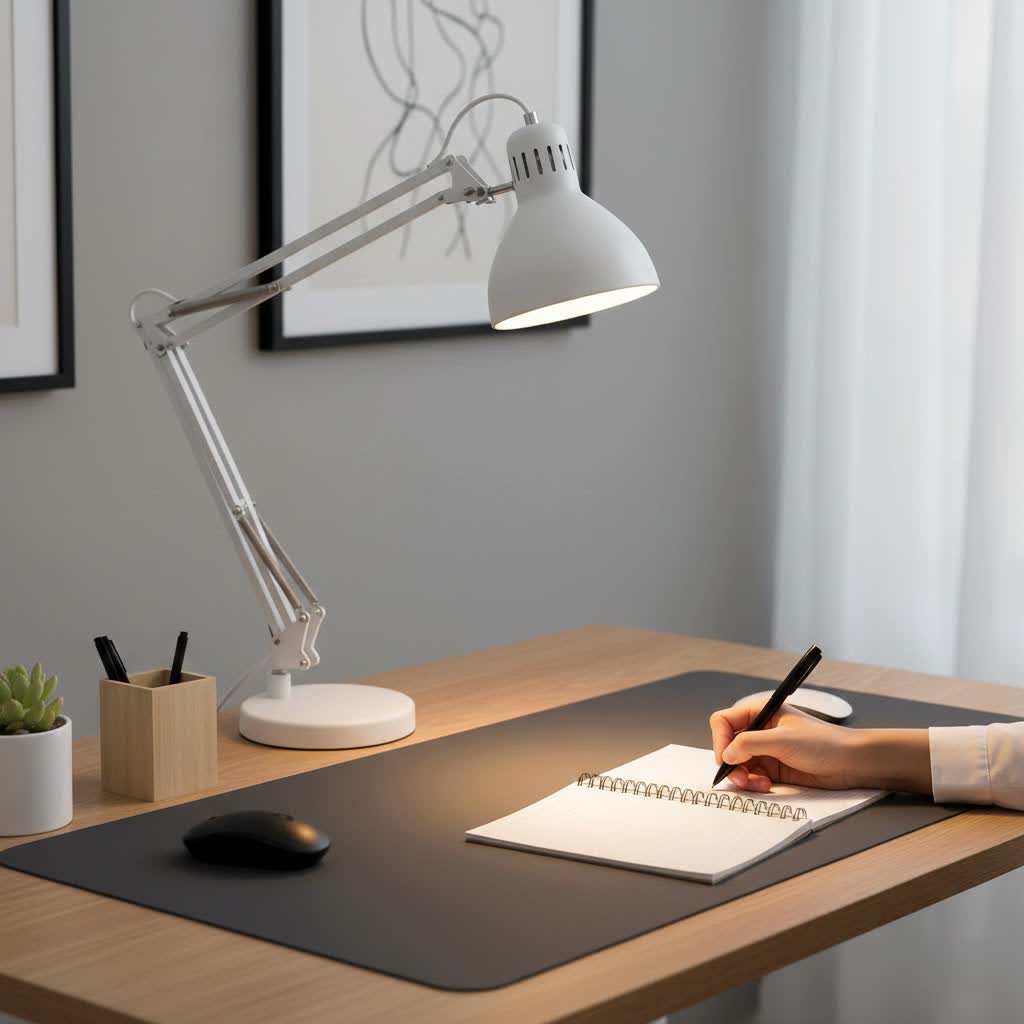
The right lighting can transform your workspace, turning a mundane desk into a beacon of productivity and comfort. If you’ve ever struggled with eye strain after a long day of work or found yourself squinting at documents, you understand the critical role a good desk lamp plays. As an Admin with over a decade of experience in illumination technology, from classic designs to modern LED marvels, I’m here to guide you through the world of desk lamps. This comprehensive guide will illuminate the path to selecting a desk lamp that perfectly suits your needs and enhances your daily routine.
Why You Need a Desk Lamp?
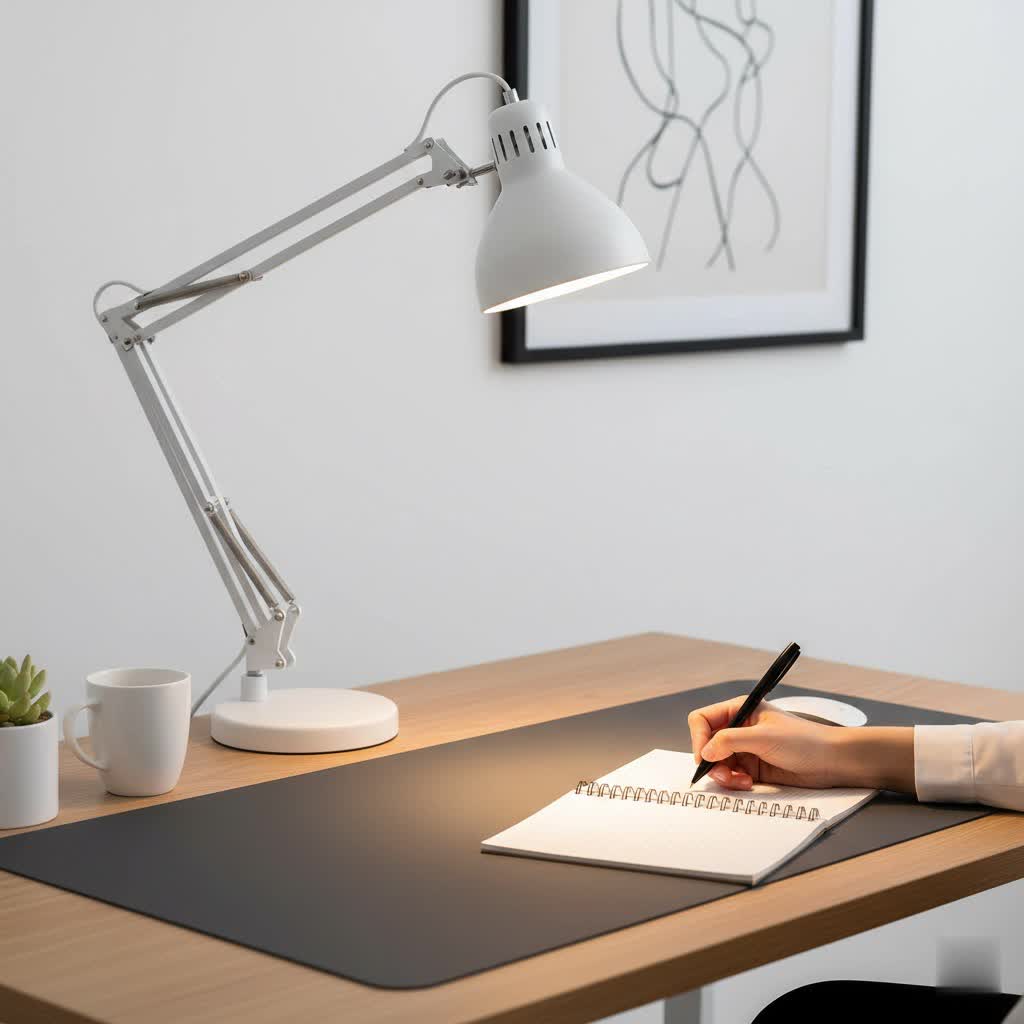
Proper lighting is not merely a convenience; it’s a fundamental requirement for maintaining focus, boosting productivity, and safeguarding your visual health, especially when you have a Desk With Lamp. Insufficient or poorly designed lighting can lead to a host of problems, including digital eye strain, headaches, and decreased concentration, making tasks feel more arduous than they need to be. A dedicated desk lamp provides focused illumination directly where you need it, reducing shadows and glare that can fatigue your eyes. By creating an optimized lighting environment, a quality desk lamp not only improves your ability to perform tasks but also helps protect your long-term eye health and overall well-being. It ensures that whether you’re working on complex projects, studying for exams, or simply enjoying a good book, your eyes are supported by adequate, comfortable light.
Popular Types of Desk Lamps
The world of desk lamps offers a diverse array of designs, each tailored to specific needs and aesthetic preferences. Understanding the different types can help you find the ideal companion for your desk.
- Student Desk Lamps: Often characterized by their compact size and functional designs, these lamps prioritize bright, focused light for reading and writing. Many models include adjustable necks to direct light precisely, making them perfect for late-night study sessions.
- Office Desk Lamps: Designed for extended work periods, office lamps typically feature advanced adjustability, stable bases, and often incorporate modern LED technology with dimming and color temperature controls. They are built to provide even, glare-free illumination over a wider area.
- Architect Desk Lamps: These lamps are distinguished by their articulated, multi-jointed arms that offer exceptional flexibility and reach. They are ideal for technical drawings, crafting, or any task requiring precise light placement over a large surface. Their industrial aesthetic also adds a distinct touch to a modern workspace.
- Reading Desk Lamps: While any good desk lamp can be used for reading, dedicated reading lamps often feature warmer color temperatures and softer, diffused light to reduce eye strain over prolonged periods. Some include clip-on designs for portability.
Each type offers unique advantages. Student lamps are budget-friendly and functional, office lamps offer sophisticated controls and ergonomics, architect lamps provide unparalleled flexibility for detailed work, and reading lamps prioritize visual comfort. Choosing the right one depends heavily on your primary activities and the specific environment of your desk.
Key Factors to Consider When Choosing a Desk Lamp
Selecting the perfect desk lamp involves more than just picking one that looks good. Several technical and design aspects significantly impact its performance and your comfort.
Bulb Type
The heart of any lamp is its bulb, and the technology behind it has evolved considerably.
- LED (Light Emitting Diode): LEDs are the most popular choice today, lauded for their energy efficiency, exceptionally long lifespan (up to 50,000 hours), and minimal heat emission. They offer customizable lighting options, including adjustable brightness and color temperature, making them highly versatile for various tasks and times of day. While the initial cost might be higher, their longevity and low energy consumption offer significant savings in the long run.
- Halogen: Halogen lamps produce a bright, natural white light similar to incandescent bulbs but are more energy-efficient and last longer. They are excellent for tasks requiring high clarity, such as detailed reading or crafting, as their focused light reduces eye strain. However, they can generate a considerable amount of heat.
- Fluorescent: Fluorescent bulbs are energy-efficient and provide uniform lighting. They last much longer than incandescent bulbs and emit less heat than halogens. However, some users find their light to be harsher and less natural, which can occasionally lead to eye discomfort. They may also be prone to flickering if not designed with flicker-free technology.
- Incandescent: These traditional bulbs produce a warm, natural light, creating a cozy atmosphere. However, they are highly energy-inefficient, have a short lifespan, and generate a lot of heat, making them less ideal for prolonged desk work where efficiency and eye comfort are paramount.
|
Our Picks for the Best Desk Lamp in 2026
We may earn a commission when you use one of our links to make a purchase.
|
||
| Num | Product | Action |
|---|---|---|
| 1 | LED Desk Lamp with Clamp, Architect Desk Lamp for Home Office with Remote, 24W Ultra-Bright Desk Light with Stepless Dimming and Stepless Color Temp, Memory Function for Study and Workbench |

|
| 2 | LED Desk Lamp for Office Home, Power Strip with 3 Outlets 4 USB Charging Ports(2 USBC), 4 Modes 5 Level Brightness Desk Light, Small Desk Lamp for College Dorm Room Essentials |
|
| 3 | Desktop Lamp 10X Magnification Magnifying Glass with Light and Stand with 360 Degree Adjustable Detachable Desktop Magnifier Suitable for Reading, Repairs, Crafts, and Close Work and More |
|
| 4 | LED Desk Lamp with Clamp, Eye-Caring Clip on Lights for Home Office, 3 Modes 10 Brightness, Long Flexible Goose-Neck, Metal, Swing Arm Architect Task Table Lamps with USB Adapter, White |
|
| 5 | LED Desk Lamp for Office Home, Eye-Caring Desk Light with Stepless Dimming Adjustable Flexible Gooseneck, 10W USB Adapter Desk Lamp with Clamp for Reading, Study, Workbench (Grey) |
|
| 6 | Micomlan Led Desk Lamp with Clamp, Architect Desk Lamp for Home Office with Atmosphere Lighting, 24W Ultra Bright Auto Dimming Computer Light Stepless Dimming and Tempering LED Table Light |
|
| 7 | LED Desk Lamp for Office Home, Eye-Caring Desk Light with Stepless Dimming Adjustable Flexible Gooseneck, 10W USB Adapter Desk Lamp with Clamp for Reading, Study, Workbench (Pink) |
|
| 8 | LED Desk Lamp with Clamp, Eye-Caring Clip on Lights for Home Office, 3 Modes 10 Brightness, Long Flexible Goose-Neck, Metal, Swing Arm Architect Task Table Lamps with USB Adapter, Black |
|
| 9 | LED Desk Lamp for Office Home, Eye-Caring Desk Light with Stepless Dimming Adjustable Flexible Gooseneck, 10W USB Adapter Desk Lamp with Clamp for Reading, Study, Workbench (White) |
|
| 10 | LED Desk Lamp for Office Home, Eye-Caring Desk Light with Stepless Dimming Adjustable Flexible Gooseneck, 10W USB Adapter Desk Lamp with Clamp for Reading, Study, Workbench (Black) |
|
Wattage and Brightness (Illuminance)
The intensity of light, measured in Lux (Lx) or Foot-Candles (FC), is crucial for a comfortable and productive workspace.
- Appropriate Wattage and Brightness: For activities requiring concentration, such as prolonged computer use or intricate tasks, an illuminance level of at least 500 Lux is recommended. A good desk lamp should provide ample brightness without being overpowering. Many modern LED lamps offer dimming functions, allowing you to adjust the light intensity to suit different tasks or ambient light conditions.
- Ideal Brightness for Different Spaces: A wide and evenly distributed light beam is essential to prevent eye fatigue. Look for lamps with asymmetrical light beams that direct light onto your specific work area while minimizing glare on screens or reflective surfaces. Crucially, a high-quality desk lamp should be flicker-free to avoid headaches and eye strain, and designed to provide glare reduction through functional coverage and diffusion panels that soften brighter spots.
Design and Style
Beyond functionality, a desk lamp contributes significantly to the aesthetics of your workspace.
- Style and Aesthetics: Choose a lamp whose style complements your existing decor, whether it’s modern, minimalist, traditional, or industrial. The right design can elevate your workspace, turning it into an inviting and inspiring environment.
- Materials and Durability: Lamps are crafted from various materials, including metal, plastic, wood, and glass. Durable materials not only ensure longevity but also add to the lamp’s perceived quality and aesthetic appeal. Consider the construction and stability of the base or clamp, ensuring it remains steady during use.
Additional Features
Modern desk lamps often come equipped with smart features that enhance usability and convenience.
- Brightness and Color Temperature Adjustment: The ability to dim the light and change its color temperature (from warm white for relaxation to cool white or daylight for focus, typically 2700K to 6500K) allows you to tailor the lighting to your activity and time of day. This adaptability is key for eye comfort and mood setting.
- Timer Function: A built-in timer can be useful for managing work intervals or as a gentle reminder to take breaks.
- USB Charging Ports and Wireless Charging: Many lamps now include integrated USB ports or wireless charging pads, offering convenient power solutions for your devices directly on your desk.
- Low Blue Light Emission: Excessive exposure to high-intensity blue light, especially from screens, can contribute to digital eye strain. Some LED desk lamps are designed to emit low blue light, protecting your eyes during long hours of work.
- Motion Sensors: Advanced models may feature ambient light sensors for automatic dimming, adjusting the lamp’s brightness based on the surrounding environment, or even motion sensors that turn the light on/off as you approach or leave your desk.
Comparison Table: Best Desk Lamps for Your Workspace
| Model | Pros | Cons | Estimated Price |
|---|---|---|---|
| BenQ WiT e-Reading Desk Lamp | Wide illumination (150% wider light range), intelligent e-Reading mode, auto-dimming, excellent color temperature/brightness adjustment, flicker-free, low blue light. | Higher price point, larger footprint (for some setups). | $200 – $250 |
| EppieBasic LED Desk Lamp | Ultra-wide (31.5-inch) LED bar for extensive coverage, 45-degree angled LEDs reduce glare, touch controls for brightness/color, automatic light-sensing. | Clamp-on only (needs specific desk thickness), flexible neck may wear over time, premium price. | $70 – $100 |
| Lampat LED Desk Lamp | Excellent value for money, multiple lighting modes (reading, studying, relaxing, sleeping), good coverage and lighting, touch controls. | Not as wide illumination as premium models, simpler design. | $30 – $50 |
| UPLIFT Desk LED Desk Lamp E7 | Clamp-on design saves desk space, good for large desks, gentle light over a wide area, highly adjustable. | Less detailed feature set compared to high-end lamps, basic aesthetic. | $70 – $90 |
| Lumi Charge LED 6-in-1 Desk Lamp | Multifunctional: wireless charging, universal phone dock, USB port, intelligent LED display (time, date, temperature), motion sensor, adjustable arm. | Light diffuser is plastic, potential for clutter with multiple integrated features if not utilized fully. | $80 – $120 |
Desk Lamp Buying Guide
Navigating the multitude of options can be daunting, but a systematic approach will simplify your decision-making process.
- Identify Your Needs: Begin by considering your primary use for the lamp. Is it for intense study, professional office work, detailed crafting, or casual reading? This will dictate the required brightness, adjustability, and specialized features.
- Choose the Right Lamp Type: Based on your needs, narrow down the types of lamps (e.g., clamp-on for small desks, architect lamp for large workspaces, LED for energy efficiency and customization).
- Compare Features, Price, and Quality: Once you have a few types in mind, compare specific models based on the factors discussed above: bulb type, brightness, color temperature, adjustability, and additional features. Don’t solely focus on the lowest price; a slightly higher investment in a quality lamp can provide better long-term value and eye comfort.
- Research Warranty and Support: Understand the manufacturer’s warranty and return policies. A good warranty indicates confidence in the product’s durability.
- Purchase from Reputable Retailers: Buy your desk lamp from established stores or online retailers known for quality products and reliable customer service. This ensures you receive an authentic product and have support if issues arise.
Top 5 Most Popular Desk Lamps
Based on expert reviews, user satisfaction, and technological innovation, here are five highly-rated desk lamps that stand out in the current market:
- BenQ WiT e-Reading Desk Lamp: This lamp is a favorite for those who spend extensive time in front of screens. Its unique curved light bar provides 150% wider illumination compared to standard lamps, evenly lighting both your desk and monitor without glare. The “e-Reading” mode automatically adjusts brightness and color temperature to ambient light, making it exceptionally gentle on the eyes. Ideal for professionals and students seeking advanced eye protection and broad coverage.
- EppieBasic LED Desk Lamp: Praised for its expansive light coverage, the EppieBasic features a 31.5-inch LED bar that can illuminate an entire desk. Its LEDs are angled to prevent glare on computer screens, and it offers touch controls for brightness and color temperature, along with an automatic light-sensing feature. It’s an excellent choice for serious workstations where wide, bright light coverage is essential, though its clamp-on design requires a suitable desk edge.
- Lampat LED Desk Lamp: An outstanding budget-friendly option, the Lampat LED provides solid performance without breaking the bank. It offers four distinct lighting modes—reading, studying, relaxing, and sleeping—along with multiple brightness levels. Its compact design and good light coverage make it a versatile choice for students or those needing a reliable lamp for general desk tasks.
- UPLIFT Desk LED Desk Lamp E7 with Clamp: Perfect for larger desks or those seeking to maximize surface area, this clamp-on lamp provides broad and gentle illumination. Its robust adjustability allows users to position the light precisely, making it a strong contender for anyone needing flexible lighting for diverse projects without sacrificing desk space.
- Lumi Charge LED 6-in-1 Desk Lamp: This multi-functional lamp is a powerhouse for modern, tech-integrated workspaces. Beyond adjustable LED lighting, it boasts a universal phone dock, USB charging port, wireless charging pad, an intelligent LED display for time/date/temperature, and even a motion sensor. It’s an all-in-one solution for those who appreciate convenience and decluttering their desk setup.
Tips for Using and Maintaining Your Desk Lamp
To ensure your desk lamp provides optimal performance and longevity, a few simple maintenance practices go a long way.
- Proper Cleaning: Regularly dust your lamp’s surfaces, including the bulb or LED panel, with a soft, dry cloth. For more stubborn grime, a slightly damp cloth can be used, ensuring the lamp is unplugged and completely dry before plugging it back in. Avoid abrasive cleaners that could damage finishes or electrical components.
- Regular Bulb Replacement (if applicable): For lamps with replaceable bulbs (e.g., halogen or fluorescent), adhere to the manufacturer’s recommended replacement schedule or change them when you notice a significant decrease in brightness or a change in light quality. LED lamps generally do not require bulb replacement.
- Careful Handling: Always adjust your lamp by its arm or base rather than pulling on the light head or cord. Avoid over-extending flexible arms or forcing joints beyond their intended range of motion to prevent mechanical wear and damage.
- Safe Placement: Ensure your desk lamp is placed on a stable, flat surface or securely clamped to avoid accidental tipping. Keep it away from sources of excessive heat or moisture. When not in use for extended periods, unplugging it can offer additional safety and energy savings.
Conclusion
Choosing the right desk lamp is a pivotal step in creating a workspace that is both functional and comfortable, actively contributing to your productivity and eye health. From understanding the nuances of bulb types and illuminance levels to appreciating the value of adjustability and smart features, the perfect desk lamp is one that aligns seamlessly with your individual needs and environment. By considering factors like flicker-free operation, glare reduction, and appropriate color temperature, you empower yourself to make an informed decision that will benefit you for years to come. Invest wisely, and let your desk with lamp illuminate your path to success. What essential feature will you prioritize in your next desk lamp?
Frequently Asked Questions
What is the ideal brightness level for a desk lamp to prevent eye strain?
For most tasks requiring concentration, such as reading, writing, or computer work, a desk lamp should provide at least 500 Lux (approximately 50 foot-candles) of illuminance on the workspace. This level helps reduce eye strain by ensuring there’s enough light without creating excessive contrast between your work and the surrounding area.
Are LED desk lamps truly better for eye health?
Yes, LED desk lamps are generally considered better for eye health. High-quality LED lamps offer flicker-free illumination, adjustable brightness, and tunable color temperatures, allowing users to customize light to minimize glare and reduce blue light exposure. These features collectively contribute to a more comfortable and less fatiguing visual experience.
How important is the Color Rendering Index (CRI) in a desk lamp?
The Color Rendering Index (CRI) measures a light source’s ability to accurately reveal the colors of objects compared to natural light. A CRI of 80 or higher is generally good, while a CRI of 90+ is considered excellent. A high CRI ensures that colors on your desk, whether it’s art supplies or document text, appear true-to-life, which is crucial for detailed work and visual accuracy.
Can a desk lamp help with focus and productivity?
Absolutely. A well-chosen desk lamp provides focused, even, and glare-free illumination directly on your workspace, eliminating shadows and reducing visual distractions. By optimizing the lighting environment and reducing eye fatigue, a good desk lamp allows you to concentrate better and sustain productivity over longer periods without discomfort.